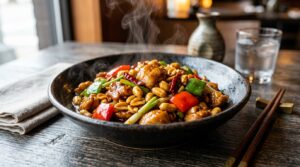
Kung Pao Chicken (Frango Xadrez): Juicy, Easy Traditional Chinese Recipe in 20 Minutes
Receitas
Glossário Culinário
Shoyu is a salty sauce obtained from fermenting soybeans, wheat, water, and salt, dark in color with a distinctive aroma. Very present in Japanese and Chinese cooking, it seasons, salts, and enhances food flavor, being indispensable in Asian dishes, marinades, sauces, and everyday stir-fries.
It has an intense salty taste with a lightly sweet, toasted background, plus a deep fermented aroma. The most common versions in Brazil vary in salt intensity and color: regular shoyu is balanced for general use, while light versions have less salt and fuller-bodied ones call for smaller doses. It is liquid, fluid, and dissolves easily in broths and marinades. Once opened, keep it in a cool place away from light, and in the fridge if the label says so, always tightly closed to preserve the aroma.
The closest substitute is another style of soy sauce, adjusting the amount for salt content. In a pinch, dissolve salt in a little vegetable or meat broth with a pinch of brown sugar to mimic part of the effect, but without the fermented aroma of the original. Gluten-free versions like tamari work well in most Asian recipes. Avoid swapping in Worcestershire sauce or sweet ready-made sauces without adjusting, as the flavor profile changes a lot.
Because it is quite salty, the ideal is to taste the food before adding more salt when the recipe calls for shoyu. Added at the end of cooking, it better preserves its fragrance; boiled for a long time, it turns rounder and less aromatic. One spoonful goes a long way, so start with a little and adjust gradually, especially in broths and marinades that will reduce.
Receitas

Arroz-e-risotos
Comidas-orientais


