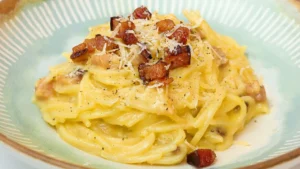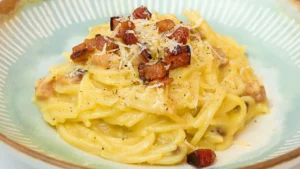
Spaghetti Carbonara: Simple and Easy Recipe
Massas
Glossário Culinário
Bacon is a cut of pork, usually from the pig’s belly, cured with salt and smoked, sold in slices or as a slab. When heated, it releases a tasty fat and turns crispy, used both as a seasoning ingredient and as the star of dishes. Its smoky, salty flavor enhances pastas, feijoada, farofas, eggs and sandwiches, and a few slices are enough to transform a simple recipe.
Sliced bacon has alternating layers of meat and fat, pink color with white parts and a characteristic smoky aroma. Slab bacon, sold in chunks or sheets, is ideal for cutting into dice and yields better in feijoadas and stews. There are leaner versions, like loin bacon, and plain salt pork (toucinho), which is only salted and not smoked. When buying, prefer firm pieces, with light-colored fat and no sour smell, and keep refrigerated well wrapped, slicing only what you will use.
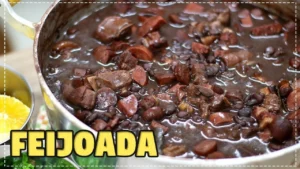
Bacon is essential in carbonara, where its fat coats the pasta along with eggs and cheese, and in feijoada, where it joins paio and pork ribs in cooking the black beans. It also enriches farofas, quiches, savory pies, vegetable soups and everyday beans, besides accompanying scrambled eggs, burgers and hot dogs. To use as seasoning, fry the cubes first and use the released fat to sauté onion, garlic and the other ingredients of the recipe.
When there is no bacon, you can adapt:
For nicely crispy slices, start frying with the skillet still cold over medium heat, letting the fat melt slowly before browning. Strained bacon fat can be kept in a jar in the fridge and used in small amounts to sauté beans and farofa, yielding smoky flavor. As bacon is already salty, taste the recipe before adding more salt so as not to overdo the seasoning.