
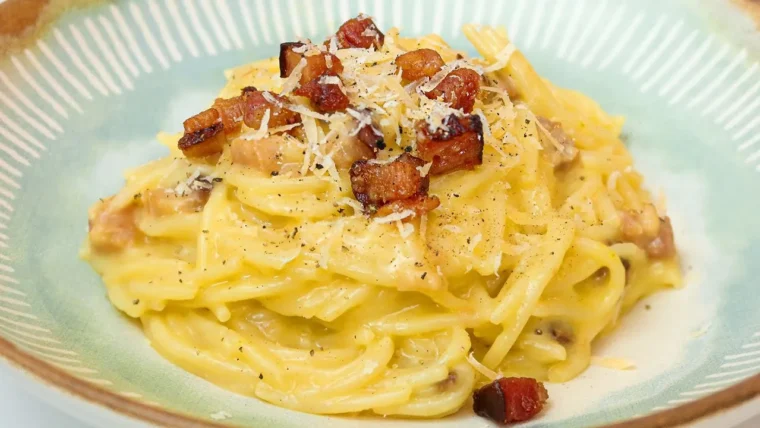
Spaghetti Carbonara: Complete and Delicious Recipe
Introduction
Spaghetti carbonara is one of the most classic and beloved recipes in Italian cuisine. With its simple, delicious combination of ingredients, including eggs, Parmesan cheese, pancetta, and black pepper, this dish is a true treat for food lovers. Learning to make spaghetti carbonara at home may seem challenging, but with the right recipe and a few helpful tips, you can prepare a perfect dish. In this article, we explore the history of spaghetti carbonara, share a detailed recipe, preparation tips, variations, and a nutrition table. If you are looking for a foolproof spaghetti carbonara recipe, this guide is for you.
History of Spaghetti Carbonara
Spaghetti carbonara is a relatively modern Italian dish, with its origins dating to the mid-20th century. It is believed to have emerged in Rome, although there are several theories about its creation. One of the most popular stories is that the carbonari, workers who produced charcoal, prepared this simple, hearty dish for their meals. Another theory suggests the dish was created during World War II, when American soldiers in Italy added bacon and eggs to Italian pasta dishes. Whatever its origin, spaghetti carbonara has become a beloved dish enjoyed around the world.
Ingredients
To make a delicious spaghetti carbonara, you will need the following ingredients:
Main Ingredients
- 14 oz (400 g) spaghetti (good quality)
- 7 oz (200 g) pancetta or guanciale (good quality)
- 4 large eggs (good quality)
- 1 cup grated Parmesan cheese (good quality)
- 2 garlic cloves (finely chopped)
- Salt and black pepper to taste
- 2 tablespoons olive oil (optional, good quality)
- Fresh parsley leaves for garnish (optional)
Instructions
Step 1: Preparing the Ingredients
- Pancetta or Guanciale: Cut the pancetta or guanciale into small cubes.
- Eggs and Cheese: In a large bowl, beat the eggs and mix with the grated Parmesan cheese until smooth.
- Garlic: Finely chop the garlic cloves.
Step 2: Cooking the Spaghetti
- Cooking the Spaghetti: In a large pot, cook the spaghetti in boiling salted water until al dente, following the package directions.
- Reserving the Cooking Water: Reserve a cup of the cooking water before draining the spaghetti.
Step 3: Preparing the Pancetta
- Frying the Pancetta: In a large skillet, heat the olive oil (if using) over medium heat. Add the pancetta or guanciale and fry until golden and crisp.
- Adding the Garlic: Add the finely chopped garlic to the skillet and sauté 1-2 minutes more, taking care not to burn it.
Step 4: Assembling the Spaghetti Carbonara
- Mixing the Spaghetti: Add the cooked spaghetti to the skillet with the pancetta and garlic, tossing well so the spaghetti absorbs the flavors.
- Adding the Egg and Cheese Mixture: Remove the skillet from the heat and add the egg and cheese mixture, stirring quickly so the eggs cook gently in the spaghetti’s heat, forming a creamy sauce.
- Adjusting the Consistency: If the sauce is too thick, add a little of the reserved cooking water, one tablespoon at a time, until you reach the desired consistency.
- Seasoning: Season with salt and black pepper to taste.
Step 5: Serving the Spaghetti Carbonara
- Serving Immediately: Serve the spaghetti carbonara immediately, garnished with fresh parsley leaves if desired, and a generous serving of grated Parmesan cheese.
Prep Time and Yield
- Prep Time: Approximately 30 minutes
- Yield: Serves 4
Tips for a Perfect Spaghetti Carbonara
- Good-Quality Ingredients: Use high-quality pancetta or guanciale, Parmesan cheese, and spaghetti for the best flavor.
- Cooking the Spaghetti Al Dente: Cook the spaghetti until al dente so it keeps a good texture and does not go soft when mixed with the sauce.
- Mixing Quickly: Add the egg and cheese mixture off the heat and stir quickly so the eggs do not overcook and form lumps.
Spaghetti Carbonara Variations
Spaghetti Carbonara with Mushrooms
Add 7 oz (200 g) of sliced fresh mushrooms to the skillet with the pancetta for a richer, tastier version.
Herbed Spaghetti Carbonara
Add fresh herbs such as basil or thyme to the egg and cheese mixture for a touch of freshness.
Spaghetti Carbonara with Cayenne Pepper
Add a pinch of cayenne pepper to the egg and cheese mixture for a spicy, interesting twist.
Nutritional Benefits
Spaghetti carbonara is a delicious meal that can fit into a balanced diet when eaten in moderation. Spaghetti provides complex carbohydrates, an important source of energy. Eggs are an excellent source of high-quality protein and essential vitamins such as vitamin B12 and choline, important for brain health. Parmesan cheese adds calcium and protein, essential for bone health. Although the dish can be rich in calories and fat, it can be enjoyed as part of healthy eating.
Nutrition Table
| Component | Amount per serving (7 oz) |
|---|---|
| Calories | 450 kcal |
| Carbohydrates | 50 g |
| Protein | 20 g |
| Fat | 20 g |
| Saturated Fat | 8 g |
| Trans Fat | 0 g |
| Dietary Fiber | 3 g |
| Sodium | 600 mg |
| Sugars | 2 g |
Conclusion
Spaghetti carbonara is a classic, delicious recipe that pairs simple ingredients with intense, comforting flavor. Perfect for any occasion, this dish is easy to make and always a hit.
We hope this complete guide helps you make a delicious spaghetti carbonara at home. Follow the tips and variations to adapt the recipe to your taste and enjoy every bite of this delicacy. Enjoy your meal!
Share This Recipe
If you liked this spaghetti carbonara recipe, share it with your friends and family! Spread the joy of this delicious meal and help others discover how easy it is to make at home.
Liked it? Find more recipes like this on our site or join our group on Facebook


💬 Comentários (0)
Deixe sua teoria ou opinião sobre esta matéria.
Nenhum comentário por enquanto. Seja o primeiro a comentar!