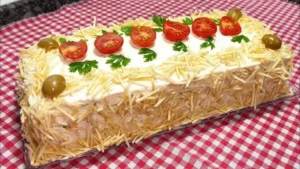
Creamy Blender Chicken Pie: Fluffy Batter That Melts in Your Mouth With a Juicy Filling
Salgados Lanches
Glossário Culinário
Onion is the bulb of the Allium cepa plant, made of juicy, crunchy layers wrapped in a thin gold, white, or red skin. With flavor ranging from mild to sharp, it is, together with garlic, the base of Brazilian seasoning, present in rice-and-beans sofrito, sauces, salads, farofas, and roasts. Raw it stings and makes eyes water; cooked, it turns sweet and melts into the dish.
The most used varieties are white, firm with balanced flavor; yellow, great for long cooking; and red, milder and crunchier, ideal raw. There are also pearl onions, small and sweet, widely used in preserves and side dishes, and shallots, smaller with delicate flavor. When cut, onion releases gases that irritate the eyes, hence its tear-jerking fame.
Sauteed, it starts almost every savory dish: rice, beans, sauces, stews, and pot meats. Slowly caramelized, it becomes a sweet-sour topping for burgers, pizzas, and bruschetta. Raw, in thin rings or chopped, it goes into vinaigrette, salads, ceviche, and potato salad. Roasted whole, pickled in slices, or breaded and fried, it takes on completely different textures.
If one type is missing, the others swap well: red can go raw in place of white, and white or yellow take over sautes and stews. Leeks, especially the white part, mimic the sweetness of cooked onion. Onion powder or dehydrated onion seasons in smaller amounts but does not reproduce the texture. Chopped scallions work as a finishing touch, not as a base.
To cry less, use a sharp knife, cut the root end last, and chill the onion for a few minutes before chopping when possible. Whole onions with skin keep for weeks in a dry, cool, airy place, away from potatoes, which speed up sprouting. Once cut, store in a sealed container in the fridge and use within a few days. The green sprout that sometimes grows in the center can be removed to mellow the flavor.