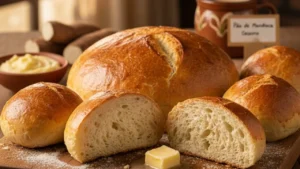
Homemade cassava bread: budget-friendly soft recipe for 2026
Paes-salgados
Glossário Culinário
Cassava (mandioca), also called aipim or macaxeira depending on the region, is a root that symbolizes Brazilian cooking. With white or yellowish flesh and a texture ranging from firm to creamy, it can be boiled, fried, roasted or turned into flour, starch and tapioca. It anchors dishes like bobó, escondidinho, vaca atolada, pirão and cakes, from breakfast to dinner.
Market cassava is sweet cassava (mandioca mansa), safe for direct consumption after cooking. There is also wild/bitter cassava (mandioca brava), used only by industry for flour and starch, which must never be eaten raw. A good root has intact skin without spots and clear, firm flesh. Once cooked, the flesh softens and can turn creamy, ideal for purées, or stay firm, good for frying. It yields cassava flour (farinha), sweet and sour starches (polvilho) and tapioca gum.
Boiled in salted water, it accompanies meats and soups or becomes purée for escondidinhos. Fried in sticks, it is the classic crispy bar snack. Roasted with butter and herbs, it turns golden and soft. Cooked and blended with coconut milk and shrimp, it forms bobó; with dried beef, vaca atolada and escondidinho. In sweets, it yields cassava cake, tapioca cake and cassava bread. It pairs with butter, coconut, coalho cheese, dried beef, bacon and green onions.
In stews and sides, cassava can be swapped for potato, mandioquinha (arracacha) or yam, adjusting cooking time. In escondidinho purées, mashed potato or pumpkin work well. For frying, potato is the closest alternative. As a thickener for pirão and soups, cassava flour can be replaced by corn flour in some recipes, with a slightly different texture.
The name changes across Brazil: aipim in the Southeast and South, macaxeira in the North and Northeast, mandioca in São Paulo and much of the country. For even cooking, cut into similar pieces and remove the tougher central fiber. If cassava resists softening, finishing in a pressure cooker solves it. Frozen already peeled and cut, it speeds up routines without losing quality.
Paes-salgados
Bolos-e-doces
Sopas-e-caldos


