
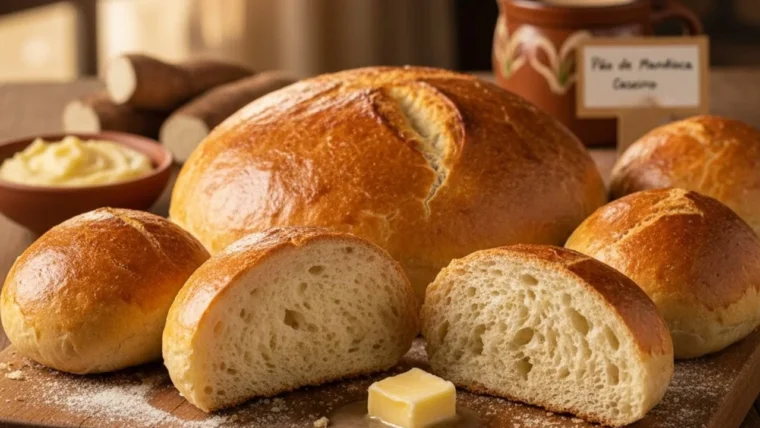
One of the greatest symbols of Brazilian cuisine gets a homemade, budget-friendly version at the start of 2026, winning over families across the country. This homemade cassava bread (pão de mandioca) promises an extremely soft crumb and a mild flavor, perfect for breakfast or an afternoon snack. This recipe, which revives a countryside tradition, has become a trend thanks to its easy preparation and bakery-style result, all at a low cost that fits the family budget.
The secret of the recipe, which went viral through specialized channels such as Receitas de Pai, lies in using cooked, mashed cassava. This ingredient changes the gluten structure and locks in lasting moisture, preventing the quick drying common in other breads. As a result, even cooks with little kitchen experience can achieve a professional result, with that characteristic golden shine. In addition, the root’s light natural sweetness pairs well with both sweet and savory fillings, offering everyday versatility.
To ensure the dough succeeds, the cassava must be lukewarm and mashed into a smooth puree. The process requires patience, as the dough needs to rest in a warm, draft-free spot until doubled in volume, an essential step for forming the air pockets that give it a cloud-like texture. Meanwhile, kneading for about ten minutes develops the fibers, ensuring the bread rises evenly in the oven and does not crumble when sliced.
The finishing touch that makes all the difference
The detail that elevates the presentation of homemade cassava bread is brushing it with egg yolk before baking. This simple step guarantees the golden crust and shine that impress at the table. Once baked, serve slices still warm with butter to release the full characteristic aroma of cassava. To keep them soft for up to three days, simply store the completely cooled loaves in plastic bags or airtight containers. After that, lightly warming them in the toaster or oven restores the fluffy texture and fresh-baked flavor.
Why is this recipe a hit in 2026?
At a time when the cost of living squeezes Brazilian family budgets, budget-friendly, nutritious comfort recipes like cassava bread stand out. It represents more than food; it is a connection to the country’s cultural roots, a practical way to bring countryside flavor into the city kitchen. So it is no surprise that it ranks among the most searched preparations in the first month of 2026, proving that tradition, combined with practicality, always finds its place.
Recipe:
Prep time: 30 min (+ resting time) Yield: 2 to 3 medium loaves
Ingredients
-
The base:
17.6 oz (500 g) cooked cassava (already peeled, woody core removed).
-
2 large eggs.
-
1 cup (240 ml) lukewarm milk (it must not be boiling).
-
1/2 cup (120 ml) vegetable oil (or 2 heaping Tbsp butter/margarine).
-
5 Tbsp sugar.
-
1 level tsp salt.
-
Fermentation:
1 packet active dry yeast (2 1/4 tsp / 10 g) OR 1 oz (30 g) fresh yeast.
-
The structure:
About 2.2 lb (1 kg) all-purpose flour (you may need a little less or more, depending on how moist the cassava is).
Directions
1. Prepare the cassava Cook the cassava until very soft, almost falling apart. Drain the water and remove all fibers (the tough core in the middle). Let cool to lukewarm.
**Tip:** Do not use cassava while it is too hot, as excessive heat kills the yeast.
**2. The blender (the secret to a smooth dough)** In the blender, add:
- The eggs
- The lukewarm milk
- The oil (or butter)
- The sugar
- The salt
- The cooked cassava (a little at a time, so as not to overload the blender)
Blend everything until it forms a smooth, even cream, like a thick smoothie.
3. Mixing Pour this yellow cream into a large bowl. Add the yeast and mix well with a wooden spoon or spatula.
4. Getting the dough right Start adding the all-purpose flour gradually, cup by cup, stirring constantly.
- When the dough gets too heavy to stir with the spoon, start using your hands.
- Transfer to a floured counter and knead well.
- The ideal dough: The dough should be smooth, elastic and pull away from your hands, but still slightly moist and soft. Too much flour makes the bread tough.
5. First rise Shape the dough into a ball, place it back in the bowl, cover with a clean kitchen towel (or plastic wrap) and let rest in an enclosed spot (such as inside the turned-off oven) for 40 to 60 minutes, or until doubled in volume.
6. Shaping After the dough rises, divide it into 2 or 3 portions. Roll out with a rolling pin and roll up into a homemade loaf shape. Place in pans greased with oil and dusted with flour.
7. Second rise Cover again and let rise for another 30 to 40 minutes. They will get nice and puffy.
8. Baking
- (Optional): Brush the top with an egg yolk mixed with a splash of coffee or milk for a deep golden color.
- Place in a preheated oven at 350°F (180°C, moderate heat) for about 35 to 45 minutes, or until the surface is golden.
x Secrets to the perfect loaf
- Milk temperature: The milk should be lukewarm, like baby-bottle temperature. If it burns your finger, it is too hot for the yeast.
- Cooking water: For a stronger flavor, replace half of the milk with the cassava cooking water (as long as it is not too salty).
- Cooling: As soon as you take them out of the oven, remove from the pans and place on a rack (or leaning against the edge of the pan) so the steam escapes. This keeps the bottom of the bread from getting damp and soggy.


💬 Comentários (0)
Deixe sua teoria ou opinião sobre esta matéria.
Nenhum comentário por enquanto. Seja o primeiro a comentar!