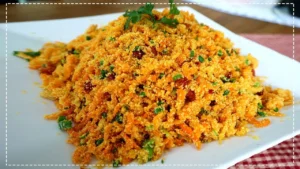
Carrot Farofa: Simple Crispy Recipe (Farofa de Cenoura)
Entradas-e-petiscos
Glossário Culinário
Grating means passing food against a grater to get fine shreds, flakes or powder, changing its texture and how it blends into the recipe. Grated carrot spreads through salads and farofa, grated cheese melts over hot pasta, grated coconut enriches cakes, and lime zest perfumes sweets and sauces. It is a simple technique that increases the ingredient’s surface and releases more flavor and aroma.
The common grater has different faces: the coarse side for carrot, zucchini and firm cheeses, the fine side for Parmesan, chocolate and coconut, and the slicing blade for delicate rounds. Grating fresh preserves moisture, aroma and texture, because grated food loses water and wilts over time. The motion calls for care with fingers at the end of the piece, when the grip gets small: use the grater guard or save the leftover for another use.
Grating suits carrot in salads, farofas and cakes, Parmesan and mozzarella over pastas, pizzas and gratins, fresh or dried coconut in sweets, chocolate in toppings, and lime and orange zest in cakes, sauces and drinks. Hard cheeses freshly grated melt better and taste livelier than bagged versions. Grated vegetables also shorten cooking time in pies, sautés and fillings, because thin strips cook fast.
Grated carrot darkens and wilts if left exposed to air too long, so grate close to serving time and keep leftovers in a closed container in the fridge. Home-grated cheese, without additives, clumps less and melts creamier in fondues and sauces. And washing the grater right after use, before residue dries between the holes, saves a lot of effort at the sink.
Entradas-e-petiscos
Receitas-fit
Entradas-e-petiscos


