Duck Rice: Traditional Step-by-Step Recipe
Arroz-e-risotos
Glossário Culinário
Confit is slow-cooking food over very low heat, submerged in fat or in sugar syrup, until tender and full of flavor. The technique was born as a way to preserve food before refrigeration and is now synonymous with fall-apart texture, from duck cooked in its own fat to sweetened garlic in olive oil and tomatoes wilting slowly in the oven.
Confit calls for low, steady heat, with the liquid barely trembling, never truly boiling, for a long time — from one to several hours depending on the ingredient. In savory cooking, the fat is usually the ingredient’s own, topped up with lard or olive oil; in sweets, it is sugar syrup. The food must stay covered by the liquid the whole time, and the doneness test is extreme tenderness: meat slips off the bone with a fork and vegetables mash without resistance.
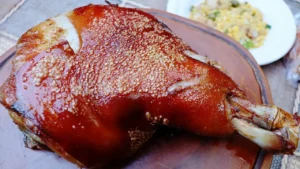
Confit works for meats like duck and chicken thighs, which can then go into a hot oven just to crisp the skin, as in duck rice, for garlic and tomatoes in olive oil, which become spreads for breads and bases for sauces, and for fruit in syrup, served with ice cream and cakes. Cassoulet, the French slow-cooked bean-and-meat stew, carries the same low-and-slow spirit.
Confit is not frying: if the liquid bubbles hard, the heat is too high and the meat toughens instead of softening. The strained cooking fat can be reused for roasting potatoes and vegetables. And ready-made confit, covered in fat and kept in the fridge, lasts for days — a direct legacy of the era when the technique was a pantry, not a luxury.