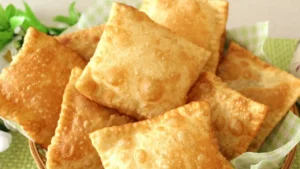
Pastel de Feira: Easy Step-by-Step Recipe
Entradas-e-petiscos
Glossário Culinário
The rolling pin is a cylinder of wood, plastic, stainless steel or silicone used to roll doughs to an even thickness. It is essential for street-market pastel, pizza, pies, quiches, empadão, breads and cookies, ensuring a crispy base and even baking.
The most common models are the roller with side handles, sturdy for heavy bread and pizza doughs, and the tapered French pin, without handles, which gives more control over delicate pie and pastel doughs. There are also nonstick and silicone versions with rings that mark thickness. A good pin is heavy enough to roll without forcing, has a smooth surface and does not shed splinters. To care for it, wash only with a damp cloth when it is unvarnished wood, dry promptly and store in a dry place. Avoid soaking, since wood swells and cracks over time.
The rolling pin rolls out pastel dough, pizza dough, empadão and quiche shortcrust, sweet pie dough, bolo de rolo and swiss-roll dough, pita bread and buttery cookies. Lightly flour the counter and pin, work from the center to the edges and turn the dough a quarter turn with each pass to keep it round. For very thin pastel and pizza, roll until you can almost see the counter through the dough. In butter doughs like quiche and empadão, roll with the dough still cold and return it to the fridge if it starts sticking, which keeps layers crispy after baking.
Without a pin, improvise with a smooth clean glass bottle, a full wine bottle, food-grade PVC pipe or a cylindrical jar. A chilled bottle helps with butter doughs. For small portions, the smooth bottom of a pan or a tall glass also work. The finish turns out less even, but it solves homemade pies and pastels.
Pastry makers keep a wooden pin only for sweet doughs, since wood absorbs fat and odors over time. Dusting the counter with starch instead of flour keeps dough from toughening. For street-market pastel, rolling the dough very thin and resting it a few minutes before frying helps form the typical crispy bubbles.
Entradas-e-petiscos
Lanches-e-salgados
Bolos-e-doces


