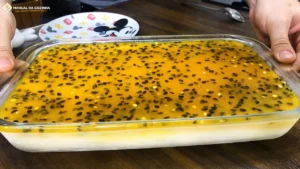
Passion Fruit Pavê: Easy Step-by-Step Recipe
Bolos-e-doces
Glossário Culinário
Passion fruit is the fruit of the passionflower vine, with wrinkled skin when ripe and yellow pulp with edible seeds. Bold, tart and very aromatic, it is the base of mousses, juices, syrups and sweet-sour sauces. Brazil is one of the world’s largest growers and consumers of the fruit.
The most common types are yellow (sour) passion fruit, large and tart, the most used in juices and desserts; purple passion fruit, smaller and sweeter, good for eating with a spoon; and sweet passion fruit, with smooth skin and mild flavor. The pulp is made of juicy arils around the seeds, which can go into the recipe or be strained depending on the texture wanted. The more wrinkled the skin, the riper and more concentrated the flavor.
In syrups and mousses, other citrus like lime and orange give similar acidity but change the signature aroma. Mango with drops of lime nears the color and some freshness in drinks. Among types, purple can replace yellow in desserts, asking for less sugar. Frozen pulp replaces fresh in almost everything, practical and with no meaningful flavor loss.
The passionflower bloom, of exotic beauty, is pollinated by large bees, and each flower yields one fruit. The seeds are edible and add crunch to mousses and syrups — strain only when you want a smooth texture. For more juice, blend the pulp with water briefly and strain without insisting, as over-blending turns bitter from crushed seeds. Choose heavy fruits with wrinkled skin, a sign of full, ripe pulp.
Bolos-e-doces
Bolos-e-doces
Bolos-e-doces


