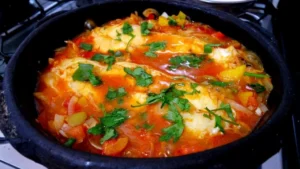
Moqueca Capixaba: Traditional Brazilian Fish Stew Recipe
Entradas-e-petiscos
Glossário Culinário
Cilantro is an aromatic herb with delicate green leaves and intense perfume, widely used as a fresh seasoning in Brazilian cooking, especially in the North and Northeast. From the same family as parsley, it has a citrusy, lightly peppery flavor that splits opinions but is indispensable in dishes like moquecas, bobós and fish stews. Leaves and thin stems are used, preferably added at the end of cooking to preserve the aroma.
Fresh cilantro has rounded, cut leaves in vivid green, with soft texture and tender stems that are edible too. Its aroma is strong and distinctive, with citrus notes reminiscent of lime and a lightly spicy background. There is also dried cilantro seed, sold as a spice whole or ground, with a sweeter, woodier flavor, quite different from the fresh leaf. In Brazil, cilantro is sold in bunches at fairs and markets, often next to scallions, forming the famous Northeastern cheiro-verde bundle.
Cilantro stars in Northeastern and Northern cooking: it goes into moqueca, bobó, vatapá, sururu, tacacá and fish and seafood soups. It also seasons beans, pirão, vinaigrettes and farofas, plus marinades for meats and poultry. Internationally, it shows up in Mexican guacamole, Indian and Thai curries and Middle Eastern salads. Being a delicate herb, it should be chopped fresh and added with the heat already low or off, since excess heat kills its perfume.
Anyone who does not enjoy cilantro’s flavor can replace it with:
Some people taste soap in cilantro because of a genetic variation linked to perceiving certain aromatic compounds, which explains why the herb divides so many palates. To keep a fresh bunch longer, wash and dry the leaves well, store in a sealed container with paper towels in the fridge, or freeze chopped in trays with a thread of water or olive oil. The stems, which hold a lot of flavor, can go straight into simmering soups and be discarded after.
Entradas-e-petiscos
Peixes-e-frutos-do-mar
Peixes-e-frutos-do-mar


