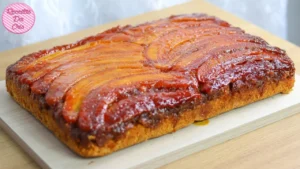
Banana Cake: Simple and Easy Recipe
Bolos-e-doces
Glossário Culinário
Banana is a tropical fruit with soft, sweet flesh, eaten fresh or in sweet and savory preparations. It provides quick energy for everyday life and appears in cakes, pies, smoothies, farofas and fried dishes. Cheap and available year-round, it is one of the most common fruits on the Brazilian table.
The best-known varieties are nanica, sweet with soft flesh; prata, firmer and less sweet; maçã, small and fragrant; ouro, tiny and very sweet; and da-terra, large and firm, suited for cooking. The peel turns from green to yellow with brown spots as it ripens, and the flesh grows sweeter and more aromatic in the process. Ripe bananas mash easily and naturally sweeten batters.
Among varieties, nanica replaces prata in cakes with a small sugar adjustment, and da-terra is irreplaceable for frying because of its firmness. In batters, apple or pumpkin puree can take the place of mashed banana. Green-banana biomass thickens recipes without sweetening. For frying, plantain and banana-da-terra are equivalent.
Bananas are picked green and finish ripening off the plant, which is why they arrive firm at the market and ripen at home within days. To speed it up, store them with apples in a paper bag; to slow it down, refrigerate, even if the peel darkens. Very ripe bananas, with well-spotted peels, are the best for cakes — and can be frozen peeled for smoothies and ice creams.
Bolos-e-doces
Bolos-e-doces
Bolos-e-doces


