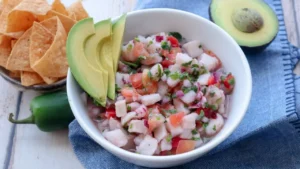
Fish Ceviche: Traditional Step-by-Step Recipe
Peixes-e-frutos-do-mar
Glossário Culinário
To marinate is to soak food in a seasoned mixture, the marinade, to gain flavor and turn more tender before cooking. The marinade usually combines an acidic ingredient such as lime, vinegar or wine with fat such as olive oil, plus salt, garlic, herbs and spices. It is the secret of teriyaki chicken, well-seasoned barbecue meats and ceviche, in which the fish firms up and gains flavor in lime juice.
A good marinade has three roles: the acid or salt softens fibers, the fat carries seasoning aromas into the food, and herbs and spices give personality. Time varies with the ingredient: fish and seafood need minutes to a few hours, chicken a few hours, and tougher meats can spend the night in the refrigerator. Marinades always work under refrigeration, never at room temperature, and in glass, stainless steel or food-grade plastic containers, as acid reacts with aluminum pans and leaves a metallic taste.
Marinating suits chicken for the grill, oven or griddle, barbecue meats and skewers, fish and shrimp for ceviche, stews and grilling, plus vegetables such as eggplant and bell pepper for antipasti. Teriyaki chicken, for example, rests in soy sauce with ginger and garlic before cooking, soaking up its signature sweet-sour flavor.
Marinade that touched raw meat should not be reused as sauce without boiling for a few minutes first, for food safety. Shallow cuts in thick pieces help the marinade sink in, but too many holes let juices escape on the grill. And storing food marinating in a tightly closed bag, air pressed out, spreads seasoning better and takes less fridge space.
Peixes-e-frutos-do-mar

Comidas-asiaticas

Aves


