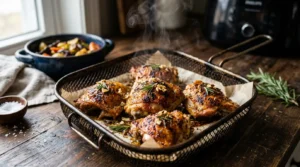
Crispy Air Fryer Chicken Thighs with Fine Herbs: the secret to golden skin and ultra-juicy meat
Receitas Air Fryer
Glossário Culinário
Browning means giving the surface of food a golden color and a lightly crisp texture through the action of heat, developing toasted flavor and an appetizing look. It is what happens to chicken skin in the skillet, to meat seared before a stew, to onion that gains color in the sauté, and to potatoes that form a crust in the oven. The golden color comes from natural reactions between the food’s sugars and proteins under heat, and it signals deeper flavor.
To brown well, the pan or baking dish must be well heated before receiving the food, with enough fat to conduct the heat. Patting the surface dry with paper towels helps a lot, because moisture creates steam and prevents browning. Cooking small batches at a time keeps the temperature from dropping so the food browns instead of stewing in its own liquid. And patience counts: stirring too much breaks contact with the heat and the browning never forms. The right stage is an even amber color, with no blackened burnt spots, which taste bitter.
Browning is used to sear meats before braises and pot roasts, leaving the outside flavorful and the inside juicy. Chicken, chicken thighs, sausage, meatballs, onion, garlic, potatoes, and vegetables gain another dimension when they go through this step. In baked pasta dishes and gratins, the final browning of the cheese layer finishes the dish with a flourish.
Browned is not burnt: the first brings toasted flavor and aroma, the second tastes bitter and should be avoided. The browned bits stuck to the pan after searing meat are a treasure called fond: dissolved with a little water, wine, or stock, they become a full-bodied sauce. And heavy-bottomed pans distribute heat more evenly, browning without burnt spots.
Receitas Air Fryer
Receitas Air Fryer
Receitas


