
Bolo de Rolo: Traditional Pernambuco Recipe, Brazil’s Irresistible Rolled Cake
Bolos-e-doces
Glossário Culinário
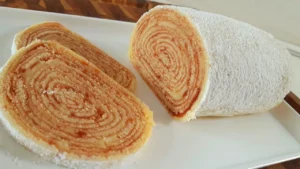
The bolo de rolo is a dessert from Pernambuco made of thin layers of batter rolled up with melted guava-paste filling. Unlike a common Swiss roll, it uses many turns of thin batter, which creates that signature spiral pattern when sliced.
Bolo de rolo batter is beaten with plenty of butter, sugar and eggs, giving a soft, lightly buttery texture. Each layer is baked very thin, almost like a pancake, and while still hot it gets a coat of creamy guava paste before being rolled. The process repeats until it forms a roll with many visible layers. Once ready, the cake is usually dusted with sugar and served in thin slices, which show off the marbled cut.
Bolo de rolo shows up at parties, afternoon coffees and celebrations, almost always as the main sweet on the table. It pairs with brewed coffee, tea and even a scoop of vanilla ice cream in dessert versions. In pastry-making, it also serves as a base for reinventions, such as individual mini bolos de rolo, jar versions and slices used in regional trifle-style pavês.
Bolo de rolo descends from the Portuguese rolled cake and was adapted in Brazil with guava paste, an ingredient abundant on the sugarcane plantations. It is recognized as cultural heritage of Pernambuco, and the recipe considered authentic demands very thin layers rolled many times, which sets it apart from an ordinary Swiss roll.
Bolos-e-doces
Bolos-e-doces

Lanches-e-salgados


