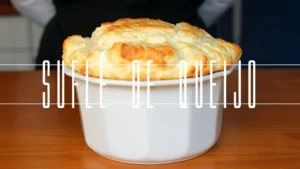
Cheese Soufflé: Traditional Step-by-Step Recipe
Salgados-e-acompanhamentos
Glossário Culinário
Beating egg whites to stiff peaks means whipping the whites until they become a white, firm, glossy foam that holds its shape when the bowl is turned over. This foam is air trapped in protein, and it works as natural leavening in delicate preparations such as cheese soufflé, egg-white pudding and airy desserts like eton mess and white-chocolate mousse.
Success starts with a perfectly clean, dry bowl, with no trace of fat, and whites with not a speck of yolk, because fat keeps the foam from firming up. Room-temperature whites whip faster and yield more volume. The stages progress: first a loose foam, then soft peaks that curl at the tip, and finally firm peaks that stand upright. A pinch of salt or drops of lemon help stabilize, and sugar, when the recipe calls for meringue, goes in gradually only after the foam has formed.
Stiffly beaten whites support savory and sweet soufflés, lighten egg-white puddings, mousses and pavés, and go into cake batters to make the crumb fluffy. Once whipped, they are folded into the batter with gentle bottom-up movements, using a spatula, so as not to lose the air. Overbeating leaves the foam dry and grainy, which breaks when mixed.
A glass, stainless-steel or copper bowl works better than a plastic one, which tends to hold microscopic grease. Starting on low speed and increasing gradually gives a more stable foam than whipping everything on high at once. And beaten whites deflate if they wait: ideally use them right away, because ready foam doesn’t like to stand in line.
Salgados-e-acompanhamentos
Bolos-e-doces
Bolos-e-doces


