
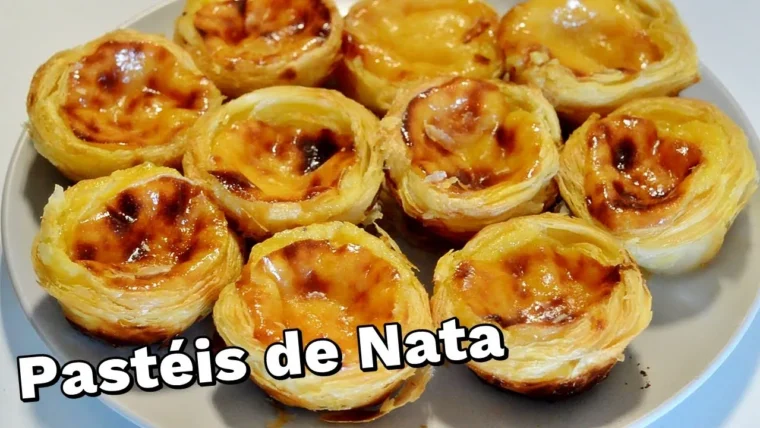
Pastéis de Nata (Portuguese Custard Tarts): Traditional Step-by-Step Recipe
Introduction
The Pastéis de Nata are among Portugal’s most iconic sweets and one of the most beloved desserts around the world. With crisp, flaky pastry and a creamy custard filling, these little tarts are a true delight for the palate. Born in Portuguese convents, pastéis de nata have a rich history and have become an essential part of Portuguese culinary culture.
In this article, we explore the history of pastéis de nata, the ingredients, the preparation method and tips for achieving perfection in the kitchen. We also present variations on this classic recipe and serving suggestions to make the experience even more special. At the end, you will find a detailed nutrition table, and we invite you to share this delicious recipe with friends and family.
History of Pastéis de Nata
The Pastéis de Nata trace their roots to Portuguese convents in the 18th century. Monks and nuns used large quantities of egg whites to starch their clothes, leaving an abundance of yolks. To avoid waste, they began creating sweets, giving rise to a rich confectionery tradition. Pastéis de nata were one of those sweets, initially known as pastéis de Belém after their origin at the Jerónimos Monastery in Belém, Lisbon.
After the Liberal Revolution of 1820, the convents were closed and the recipes passed into civilian hands. One of these recipes reached a Portuguese family, who began selling the tarts in 1837 at the Fábrica dos Pastéis de Belém. Since then, the pastel de nata has become a symbol of Portuguese confectionery and a must-try attraction for visitors.
Pastéis de Nata Ingredients
The quality of the ingredients is crucial for making Pastéis de Nata. Below are the ingredients needed for this delicious dessert:
Ingredients
-
Puff pastry: 17.6 oz (500g) good-quality puff pastry
-
Milk: 2 cups plus 2 Tbsp (500 ml) whole milk
-
All-purpose flour: 1/2 cup (60g) good-quality flour
-
Sugar: 1 1/2 cups (300g)
-
Water: 2/3 cup (150 ml)
-
Egg yolks: 6 large yolks
-
Lemon peel: 1 strip (optional, for flavor)
-
Cinnamon stick: 1 stick
-
Salt: 1 pinch
-
Powdered sugar: for dusting (optional)
-
Ground cinnamon: for dusting (optional)
Pastéis de Nata Recipe
Preparation
-
Preparing the puff pastry:
-
Preheat the oven to 482°F (250°C). On a floured surface, roll out the puff pastry until thin. Cut the pastry into circles sized to fit your tart molds.
-
Preparing the filling:
-
In a saucepan, whisk the milk with the flour. Cook over medium heat, stirring constantly, until smooth and thickened. Remove from the heat and set aside.
-
In another saucepan, combine the water and sugar. Bring to a boil over medium heat until it reaches thread stage (about 212°F / 100°C). Add the lemon peel and cinnamon stick, then remove from the heat.
-
Combining the ingredients:
-
Carefully remove the lemon peel and cinnamon stick from the sugar syrup. Slowly pour the syrup into the milk-and-flour mixture, stirring constantly to keep the yolks from curdling.
-
Next, stir in the egg yolks until the mixture is smooth and glossy.
-
Assembling:
-
Line the tart molds with the puff-pastry circles, pressing well so they adhere to the molds. Fill each shell with the custard filling.
-
Baking:
-
Bake in the preheated oven for about 15-20 minutes, until the pastry is golden and the filling starts to develop golden-brown spots on the surface.
-
Finishing:
-
Remove the tarts from the oven and let them cool on a wire rack. Before serving, dust with powdered sugar and ground cinnamon, if desired.
Yield
This recipe makes about 12 pastéis de nata, depending on the size of the molds used.
Prep Time
-
Prep time: 30 minutes
-
Cook time: 20 minutes
-
Total time: 50 minutes
Tips for Perfect Pastéis de Nata
-
Puff pastry: Use high-quality puff pastry and bake at a high temperature for a crisp texture.
-
Filling: Be sure to stir the filling mixture well so the yolks do not curdle. The mixture should be smooth and creamy.
-
Oven temperature: Bake the tarts in a very hot oven to ensure crisp, flaky pastry and a creamy filling.
-
Cooling: Let the tarts cool completely before unmolding so they do not break.
Pastéis de Nata Variations
Although the traditional recipe is unmatched, here are a few variations worth trying:
-
Pastéis de Nata with fruit: Add fruit such as strawberries or mixed berries to the filling for a fresh, fruity twist.
-
Chocolate Pastéis de Nata: Spread a layer of melted chocolate over the puff pastry before adding the filling.
-
Lemon Pastéis de Nata: Add extra lemon zest or juice to the filling for a more pronounced citrus flavor.
What to Serve with Pastéis de Nata
Pastéis de Nata are delicious on their own, but they can be paired in several ways:
-
Coffee: An espresso or a cappuccino is the perfect match.
-
Port wine: For a traditional Portuguese experience, serve with a glass of Port wine.
-
Ice cream: A scoop of vanilla ice cream next to a warm tart makes a delicious combination.
Nutrition Facts
| Nutrient | Amount per serving (approx.) |
|---|---|
| Calories | 250 |
| Carbohydrates | 30g |
| Protein | 5g |
| Fat | 12g |
| Dietary fiber | 1g |
| Sugars | 15g |
| Sodium | 50mg |
| Calcium | 6% DV* |
| Iron | 4% DV* |
*DV: Daily Values based on a 2,000-calorie diet.
Conclusion
Pastéis de Nata are a true masterpiece of Portuguese confectionery, celebrated both in Portugal and around the world. With their irresistible combination of crisp, flaky pastry and creamy filling, it is easy to see why these tarts are so loved. Whether for a special occasion or simply to satisfy a sweet craving, pastéis de nata are always a delicious choice.
Share this recipe
If you enjoyed this Pastéis de Nata recipe, share it with your friends and family! They will love trying this traditional Portuguese treat and enjoying a sweet, special moment.
Liked it? Find more recipes like this on our website or join our group on Facebook.


💬 Comentários (0)
Deixe sua teoria ou opinião sobre esta matéria.
Nenhum comentário por enquanto. Seja o primeiro a comentar!