
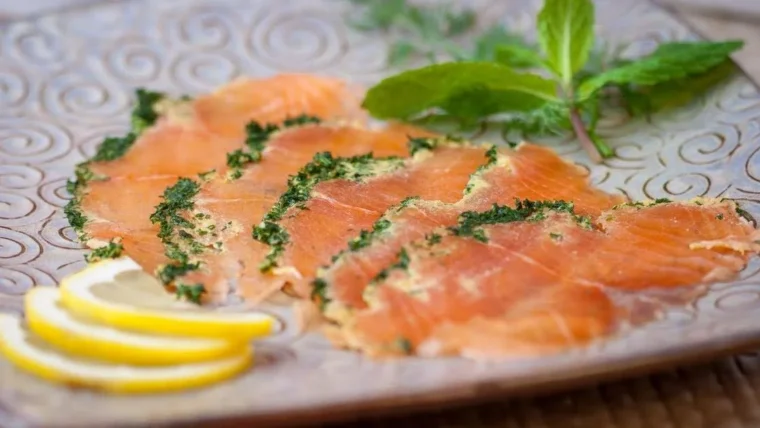
Gravlax is a Scandinavian cured-salmon delight you can easily make at home. This recipe will not only impress your guests but also let you enjoy the full flavor of fresh, natural ingredients.
What Is Gravlax?
Gravlax is a cured salmon dish from Scandinavia. Traditionally, the salmon is cured with a mix of salt, sugar and dill. The curing process not only preserves the fish but also intensifies the natural flavors of the salmon. Gravlax is often served as an appetizer, alongside bread, toast or potatoes.
Ingredients for Making Gravlax
To prepare gravlax at home, you will need a few simple but high-quality ingredients. They include:
– 2 1/4 lb (1 kg) fresh salmon (preferably skinless fillet)
– 7 oz (about 3/4 cup) high-quality coarse salt
– 7 oz (1 cup) sugar
– 2 tbsp ground black pepper
– A large handful of chopped fresh dill
– 1 lemon, zest and juice
– 1 tbsp vodka (optional, to help the cure)
Equipment Needed
To prepare gravlax, you will also need some basic kitchen equipment:
– A baking dish or large plate
– Plastic wrap
– A weight — you can use something heavy, such as cans or a specific kitchen weight
– A sharp knife for slicing the salmon after curing
– A bowl for mixing the seasonings
– Paper towels for drying the salmon
Step-by-Step Guide to Making Gravlax
Following this method will give you a delicious gravlax:
1. Preparing the Salmon
Make sure the salmon fillet is clean and dry. If the fillet still has skin, you can carefully remove it with a sharp knife.
2. Preparing the Cure Mix
In a bowl, mix the salt, sugar, ground black pepper, lemon zest and dill. Stir well so the ingredients are evenly distributed.
3. Applying the Cure Mix
Spread an even layer of the cure mix in the baking dish or on the large plate. Place the salmon fillet in the dish (skin-side down if it has skin). Cover the top of the salmon with the remaining cure mix. Make sure the fillet is completely covered. It is important to apply even pressure so the cure mix penetrates the salmon well.
4. Wrapping and Weighing
After covering the salmon with the cure mix, wrap it tightly in plastic wrap, making sure it is completely sealed. Place the dish in the refrigerator and set an even weight on top to help the curing process. The weight should press gently so the mixture can penetrate the salmon more effectively.
5. Curing Time
Leave the salmon in the refrigerator for at least 24 hours, but ideally 36 to 48 hours, depending on the thickness of the fillet and how intense you want the flavor. During this time, the salmon will release liquid that is absorbed by the cure mix, intensifying the gravlax flavor.
6. Cleaning After Curing
After the curing time, take the salmon out of the refrigerator and unwrap it. Using paper towels, remove the excess salt and sugar from the fillet. It is important to clean it well but gently, to avoid removing too much of the outer layer that makes up the gravlax flavor.
7. Slicing and Serving
Using a sharp knife, slice the gravlax into thin slices on a diagonal. The thinner the slices, the better the texture and flavor. Gravlax can be served right after slicing or stored in the refrigerator for a few days, covered with plastic wrap or in an airtight container.
Tips for Customizing Your Gravlax
Adding Herbs and Spices
Besides dill, you can try adding other herbs and spices. The classic dill combination can be enriched with:
– Cilantro
– Mint
– Dill seed
– Pink peppercorns
– Mustard seeds
Using Different Citrus Fruits
You can swap the lemon for other citrus fruits to give your gravlax a different twist:
– Orange
– Lime
– Tangerine
– Grapefruit
Adding Alcohol
Besides vodka, you can try other types of alcohol to enrich your gravlax flavor. Some options include:
– Gin
– Rum
– Whiskey
– Herbal liqueur
Benefits of Making Gravlax at Home
Making gravlax at home offers significant advantages:
Ingredient Quality
When you make gravlax at home, you can select the best-quality ingredients, ensuring a final product superior to store-bought versions.
Customization
Making gravlax at home lets you adjust the flavors to your taste, using different herbs, spices, citrus fruits and even types of alcohol.
Cost
Making gravlax at home can be more economical than buying ready-made versions, especially if you have access to a good fresh-salmon supplier at a fair price.
How to Store Your Gravlax
Gravlax should be stored in the refrigerator, in an airtight container or tightly wrapped in plastic wrap. It keeps for up to a week without losing quality. For longer storage, you can freeze it in individual portions. Just be sure to thaw it slowly before serving.
Ideal Accompaniments for Gravlax
Some accompaniments that pair perfectly with gravlax include:
– Rye bread
– Crostini or toast
– Cream cheese
– Dill mustard
– Cucumber rounds
– Thin slices of red onion
Food Safety When Making Gravlax
It is important to follow a few food-safety guidelines when making gravlax:
Keep Things Clean
Make sure all work surfaces and utensils are clean to avoid contamination.
Use Fresh Fish
Choose high-quality, very fresh salmon. If possible, use salmon that was frozen and properly thawed, as freezing can kill some parasites.
Storage Temperature
Keep the gravlax refrigerated throughout the curing process and during later storage.
History of Gravlax
Gravlax has a rich history going back to the Middle Ages in Scandinavia. Originally, fishermen fermented salmon by burying it in the sand above the tide line. Over the centuries, gravlax evolved into the more refined and safe version we know today.
Gravlax Around the World
Although gravlax comes from Scandinavia, it has become popular in many parts of the world. Each culture adds its own unique touch, so you will find variations featuring local flavors and ingredients.
Gravlax in Fine-Dining Restaurants
Gravlax has become a popular dish in many fine-dining restaurants. Renowned chefs experiment with different curing ingredients and techniques to create unique and appealing variations of this classic dish.
Conclusion
Making gravlax at home is a rewarding and delicious process. With a little preparation and patience, you can enjoy this sophisticated, flavorful dish (Gravlax), whether for a casual brunch or a more elegant dinner.


💬 Comentários (0)
Deixe sua teoria ou opinião sobre esta matéria.
Nenhum comentário por enquanto. Seja o primeiro a comentar!