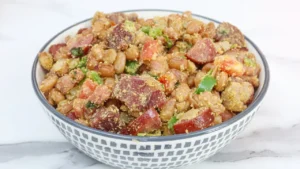
Feijão Tropeiro: Traditional Recipe Step by Step
Entradas-e-petiscos
Glossário Culinário
Farofa is a Brazilian side dish made with cassava or corn flour toasted in fat with seasonings. Crunchy and flavorful, it accompanies feijoadas, barbecues, holiday poultry and everyday dishes, bringing texture and contrast to the plate.
The base of farofa is flour toasted until golden, soaking up the flavor of butter, bacon, onion and the other ingredients. The ideal texture is loose and lightly crunchy, never too dry nor greasy.
Farofa goes with tropeiro beans, feijoada, carreteiro rice, roast meats and fish. It also stuffs poultry, enriches couscous and works as a rustic crust for breaded foods. Because it is cheap and goes a long way, it is a fixture at June festivals, barbecues and holiday dinners, adapting to whatever is in the pantry.
The most loved variations are banana farofa, egg farofa, bacon-and-collard farofa, cassava farofa with sausage and corn farofa. There are versions with dried fruit, nuts and grated carrot for the holidays, plus sweet farofas with coconut in some regions. The flour can be pre-toasted for a deeper flavor, and fresh herbs go in only at the end so they do not wilt.
Farofa comes from Brazilian cooking, heir to the Indigenous peoples’ cassava and to African and Portuguese kitchens. Tropeiro beans, a close cousin, are practically a farofa bulked up with beans and meats. A kitchen trick is to toast the flour gradually, over medium heat, stirring always: high heat burns the outside and leaves a bitter taste. Stored in a sealed jar, plain farofa keeps a few days outside the fridge.
Entradas-e-petiscos
Sopas-e-caldos
Arroz-e-risotos


