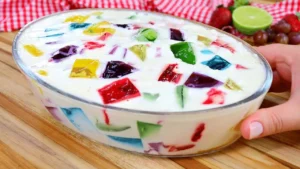
Colorful Gelatin Dessert: Easy Homemade Recipe
Bolos-e-doces
Glossário Culinário
Gelatin is a gelling agent obtained from animal collagen, sold as unflavored powder or translucent sheets. In the kitchen, it gives structure and firmness to preparations that must hold their shape once chilled, such as mousses, panna cotta, no-bake cheesecakes and the classic colorful gelatin of parties. It also goes into marshmallows, homemade gummies and some cold-served savory recipes.
Gelatin needs blooming before use: the powder rests a few minutes in cold water until it swells, and the sheets soak until soft. Then it dissolves in hot (but never boiling) liquid, because boiling weakens its gelling power. There is also a flavored, colored version, already sweetened, that skips this process. Sheets usually dissolve more evenly, while powder is easier to measure for small recipes.
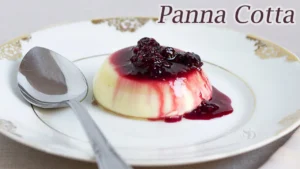
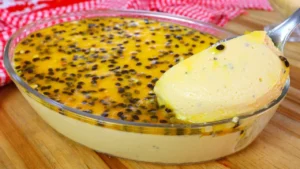
The most common use is in chilled desserts: passion-fruit, lime, mango and guava mousses, panna cotta with fruit syrups, and layered gelatins. In cold cakes and pies, it stabilizes fillings and toppings. In savory cooking, it appears in terrines and molded cold preparations. The ratio of gelatin to liquid sets the final texture, which can range from trembling creaminess to firm, sliceable set.
For vegetarian or vegan versions, the most direct substitute is agar-agar, extracted from seaweed, which sets even at room temperature and yields more per gram. Pectin works well in fruit jams and syrups. Cornstarch thickens custards but does not create gelatin’s firm, trembling texture, so it serves only when the recipe asks for creaminess, not structure.
Raw fruits such as pineapple, kiwi, papaya and passion fruit contain enzymes that keep gelatin from setting, so they should be used cooked or in syrup in recipes. Another little-known detail is that the finished dessert needs a few hours in the refrigerator to reach ideal texture, since gelling happens during slow chilling, not at prep time.
Bolos-e-doces
Bolos-e-doces
Bolos-e-doces


