
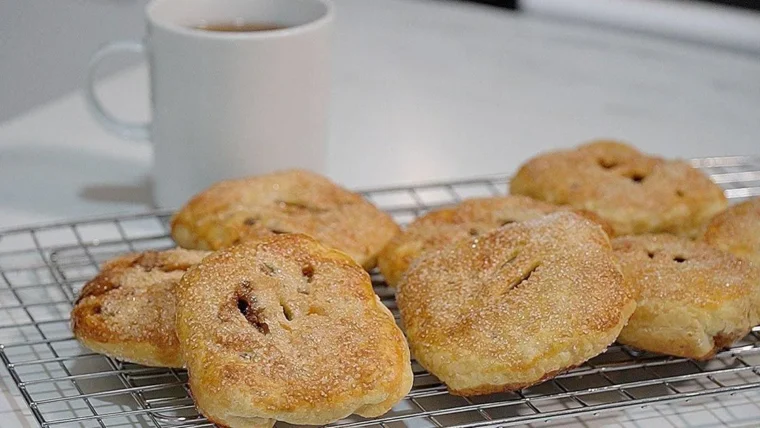
Eccles Cake is a beloved treat in the United Kingdom. In this post, we explore the rich history and recipe of this traditional sweet. Let’s find out why Eccles Cake remains popular to this day. Learn every detail and discover how to make it at home!
Eccles Cake: Origin and History
The Eccles Cake is a traditional sweet that originated in the small town of Eccles, in northwest England. This pastry is known for its rich history and unique flavor, which have made it popular over the years.
It was first mentioned in 1769 and has since been an iconic treat in the region. The name Eccles comes from the Celtic word egls meaning church, showing that the town has a long history going back to ancient times.
Earliest Records
The earliest records of Eccles Cake were found in a cookbook by Mrs. Elizabeth Raffald, published in 1769. The original recipe consisted of puff pastry filled with a mixture of currants, sugar and spices, all baked until golden. Since then, the recipe has changed very little, keeping the tradition alive.
How It Became Popular
Eccles Cake grew considerably in popularity during the 19th century. It was then that James Birch began selling these cakes in his shop, becoming one of the main promoters of the treat. Birch was so successful that he soon became synonymous with quality and tradition in making it.
Classic Eccles Cake Ingredients
The Eccles Cake has a simple list of ingredients, but the secret lies in their combination and quality.
Dough
- All-purpose flour
- Butter
- Water
- Pinch of salt
Filling
- Dried currants
- Brown sugar
- Lemon zest
- Spices (usually nutmeg and cloves)
How to Make Traditional Eccles Cake
Making an Eccles Cake is not hard. With attention to detail and by following the traditional recipe, you can make delicious cakes at home.
Step 1: Making the Dough
Mix the flour, salt and butter until sandy in texture. Add water little by little until you get a smooth dough. Wrap the dough in plastic wrap and refrigerate for 30 minutes.
Step 2: Making the Filling
In a bowl, mix the currants, brown sugar, lemon zest and spices until evenly combined. Set aside while the dough rests.
Step 3: Assembly
Preheat the oven to 400°F (200°C). Roll out the dough on a floured surface and cut into circles about 4 inches (10 cm) in diameter. Place a teaspoon of filling in the center of each circle. Fold the dough over the filling, sealing the edges well. Place the cakes on a greased baking sheet.
Step 4: Baking
Cut small slits in the top of each cake to let steam escape during baking. Bake for 20 to 25 minutes or until golden brown. Let cool before serving.
Variations and Fun Facts
The Eccles Cake has regional variations and modern adaptations.
With or Without Currants
Although the traditional version uses currants, some people prefer to substitute raisins or other dried fruits. This variation brings a new dimension of flavor to the classic cake.
Adding Nuts
Another common adaptation is adding chopped nuts to the filling. This adds a crunchy texture and a more complex flavor to the cake.
Why Eccles Cakes Are Loved
Eccles Cakes are loved for their unique combination of crisp puff-pastry texture and a sweet, lightly spiced filling. Every bite is a burst of flavors and textures that pleases palates of all ages.
Versatility
They are versatile and can be served warm or cold, on their own or with a cup of tea or coffee. This versatility makes them an excellent choice for any occasion.
Tradition
Beyond flavor, Eccles Cakes carry significant historical and cultural heritage. Eating an Eccles Cake is like traveling back in time, enjoying a piece of British tradition and culture.
Eccles Cake Around the World
Although it is a traditionally British sweet, Eccles Cake has won fans all over the world.
Export and International Production
Today, the cakes are exported to many countries and even produced locally in some regions outside the United Kingdom. This shows the universal appeal of this amazing treat.
Conclusion
If you are looking for a simple recipe rich in flavor and history, the Eccles Cake is a great choice.


💬 Comentários (0)
Deixe sua teoria ou opinião sobre esta matéria.
Nenhum comentário por enquanto. Seja o primeiro a comentar!