
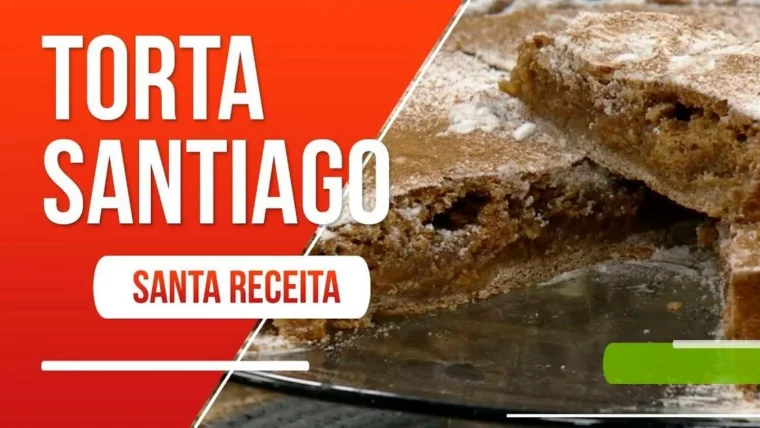
Torta de Santiago is a traditional Spanish dessert, famous for its simplicity and irresistible flavor. Originating in the region of Galicia, this cake is made mainly with almonds, eggs and sugar, with a touch of lemon. This article explores its history, key ingredients and step-by-step recipe. Keep reading to discover everything about this iconic sweet!
History and Origin of Torta de Santiago
Torta de Santiago, known to many as Tarta de Santiago, is a traditional sweet from the region of Galicia, in Spain. This dessert dates back to the 16th century, first mentioned in a manuscript dated 1577. Since then, the cake has become a symbol not only of Galicia, but of all Spain, especially associated with the city of Santiago de Compostela.
A striking feature of this cake is its decoration with the Cross of Saint James. The design is dusted with powdered sugar, giving the dessert a unique and distinctive look. Over the centuries, the recipe has remained relatively unchanged, preserving its authenticity and original flavor.
Key Ingredients
Torta de Santiago is known for its simplicity and unmistakable flavor. Here are the key ingredients:
- Almonds: This is the main ingredient, giving the cake its unique texture and distinctive flavor.
- Sugar: Used to sweeten just right, balancing the flavor of the almonds.
- Eggs: They give structure and volume to the cake.
- Lemon zest: Adds a touch of freshness and aroma to the recipe.
- Cinnamon: A subtle touch that perfectly complements the almond flavor.
How to Make Torta de Santiago
To make Torta de Santiago, follow the steps below:
- Step 1: Preheat the oven to 350°F (180°C).
- Step 2: Grind the almonds until you get a flour. Set aside.
- Step 3: In a large bowl, beat the eggs with the sugar until smooth.
- Step 4: Add the lemon zest and cinnamon to the egg and sugar mixture.
- Step 5: Gently fold in the almond flour, mixing until all ingredients are well combined.
- Step 6: Pour the batter into a butter-greased pan and bake for about 30-35 minutes, until golden and firm to the touch.
- Step 7: Let it cool completely before unmolding.
- Step 8: Decorate with powdered sugar using the Cross of Saint James stencil.
Tips for a Perfect Torta de Santiago
To make sure your Torta de Santiago turns out perfect, keep these tips in mind:
- Almond quality: Use good-quality almonds for a more intense flavor.
- Almond grind: Grind the almonds to a fine texture, almost like flour.
- Pan prep: Be sure to grease the pan well so the cake does not stick.
- Respect the baking time: Do not open the oven early or the cake may collapse.
- Decoration: Use the Cross of Saint James as a stencil to dust on the powdered sugar for a traditional look.
Recipe Variations
Torta de Santiago can be adapted in many ways, depending on personal taste or ingredient availability:
- With chocolate: Add dark chocolate shavings to the batter for a different twist.
- With orange: Swap the lemon zest for orange zest to vary the citrus flavor.
- Gluten-free: Use almond flour and make sure all ingredients are gluten-free for a version suitable for celiacs.
- With dried fruit: Add pieces of dried fig or apricot for a richer, more textured variation.
Drink Pairings
Torta de Santiago pairs well with many drinks:
- Wines: A good Spanish dessert wine, such as Pedro Ximénez, is a great option.
- Coffees: Stronger coffees, such as espresso, complement the almond flavor well.
- Teas: Herbal or fruit teas, such as chamomile or red berry, are light and tasty choices.
- Liqueurs: Amaretto can be an interesting pairing, since the liqueur is made from almonds.
Torta de Santiago Around the World
Torta de Santiago has crossed the borders of Spain and is enjoyed in many countries. Here is how the sweet is known and adapted internationally:
- In the United States: Many bakeries offer this cake in areas with large Hispanic communities, especially in Florida and California.
- In Brazil: The cake is gaining popularity at themed parties and Spanish restaurants.
- In Latin America: In countries such as Mexico and Argentina, the cake is often served at religious celebrations and traditional parties.
- In Europe: Countries such as Portugal and Italy have adapted versions that keep the essence of the original sweet.
Fun Facts About Torta de Santiago
Here are some interesting facts about Torta de Santiago:
- Recognition: In 2006, the cake earned Protected Geographical Indication (PGI) status, reinforcing the authenticity of the traditional recipe.
- Pilgrimage: The sweet is widely eaten by pilgrims who complete the Camino de Santiago, as a way to celebrate the journey.
- Breakfast: In Galicia, the cake is commonly eaten for breakfast, with a good coffee.
- No flour: The traditional recipe uses no wheat flour, making the cake naturally gluten-free, a surprise to many.
Where to Buy Torta de Santiago
If you would rather not risk it in the kitchen, Torta de Santiago can be bought in many places:
- Artisan bakeries: Many bakeries specializing in European sweets offer authentic versions of the cake.
- Supermarkets: Large supermarket chains, especially in areas with strong Spanish influence, may carry the sweet in their imported foods aisle.
- Food fairs: Gastronomic events often feature stands specializing in Spanish cuisine where you can find the cake.
- Online stores: Many online shops sell torta de Santiago and deliver to various parts of the world.
Family Recipes
Many Spanish families have their own versions of Torta de Santiago, kept and passed down from generation to generation. Recipes may include little secrets added over the years:
- Grandma secret: Some family recipes add a touch of orange blossom water for extra flavor.
- Personal touches: In some variations, using different types of almonds, such as Marcona, is common.
Traditional Events
In Spain, especially in Galicia, Torta de Santiago is often served at religious and traditional events:
- Religious feasts: During major celebrations such as Saint James Day, the cake is always present.
- Local celebrations: Local folk festivals also include the sweet in their celebrations.
Benefits of Torta de Santiago
Besides being delicious, Torta de Santiago offers nutritional benefits:
- Almonds: Rich in vitamin E, good for the skin and full of antioxidants.
- Eggs: A source of protein and essential nutrients.
- Gluten-free: Naturally suitable for celiacs.
Popular on Instagram
Torta de Santiago has also stood out on social media:
- Beautiful photos: The beauty of the Cross of Saint James decoration is widely shared on food profiles.
- Celebrity posts: Food influencers often post recipes and photos of the cake.
Myths and Truths
Over the years, several myths and truths about Torta de Santiago have emerged:
- Myth: The cake is hard to make. Truth: As shown above, the recipe is simple and anyone with a little patience can make it.
- Myth: It cannot be adapted. Truth: There are many variations of the recipe that respect the traditional flavor.
Bonus Recipe: Torta de Santiago with a Brazilian Twist
How about adding a Brazilian touch to the traditional Torta de Santiago recipe?
- With Brazil nuts: Replace part of the almonds with Brazil nuts for a Brazilian flavor.


💬 Comentários (0)
Deixe sua teoria ou opinião sobre esta matéria.
Nenhum comentário por enquanto. Seja o primeiro a comentar!