
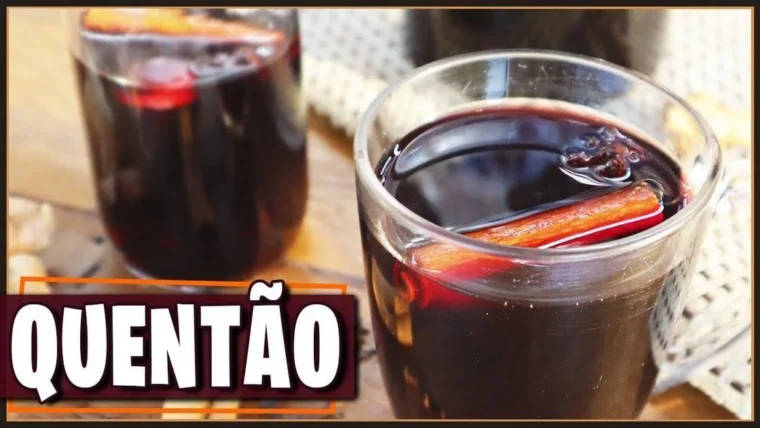
Quentão is made with cachaça, water, sugar, ginger, cinnamon, cloves, and orange peel, simmered over low heat until the flavors blend — the traditional hot drink of Brazil’s festas juninas. It takes about 30 minutes to prepare, and the result is a fragrant quentão to serve on cold nights. See the full recipe and tips for getting the ginger just right.
History: Origin and Fun Facts
Quentão is a typical drink of Brazil’s festas juninas, especially in the Southeast and South regions. Its name comes from the fact that it is served hot, ideal for warming up the cold nights of June and July. This delicious drink is made with cachaça or wine and seasoned with spices that give it a unique, comforting flavor.
The origin of quentão goes back to the colonial period, when the Portuguese brought to Brazil the tradition of hot alcoholic drinks. However, the Brazilian adaptation was to incorporate local ingredients, such as cachaça, and typically Brazilian spices, such as ginger.
There are several versions of the origin of quentão. Some historians believe the original recipe came from Portugal and was adjusted over the years with ingredients available in Brazil. Others claim the base of the recipe is Indigenous, and that the colonizers added the alcohol and spices. Either way, quentão has become a symbol of the festas juninas, enjoyed by young people and adults alike.
An interesting fact is that, in some regions of Brazil, the term quentão can refer to a different drink, made with wine instead of cachaça. Regardless of the variation, this drink remains a true icon of the celebrations of São João, São Pedro, and Santo Antônio.
Authentic Quentão Recipe
Making a good quentão is an art that requires attention to detail and, of course, the use of quality ingredients. The following recipe yields about 10 servings and takes about 30 minutes to be ready.
Ingredients:
- 4 cups (1 liter) good-quality cachaça (Brazilian sugarcane spirit)
- 1 1/2 cups sugar
- 1 cup water
- Juice of 2 oranges
- Juice of 1 lime
- Peel of 1 orange (without the white pith)
- Peel of 1 lime (without the white pith)
- 1.75 oz (50 g) ginger (finely chopped)
- 3 whole cloves
- 2 small cinnamon sticks
Directions:
- In a large pot, place the sugar and heat over medium heat until lightly caramelized.
- Add the water, the orange and lime juices, the orange and lime peels, the ginger, the cloves, and the cinnamon sticks.
- Mix well and boil for about 10 minutes so the sugar dissolves completely and the flavors blend.
- Add the cachaça and keep cooking over low heat for 10 more minutes.
- Turn off the heat and let it rest for a few minutes.
- Strain the mixture and serve hot.
Tip: Always use a good-quality cachaça to ensure the quentão’s flavor is authentic and delicious.
Tips to Perfect Your Quentão
Making a good quentão goes far beyond following the basic recipe. There are some tips and tricks that can further improve the flavor of your drink:
Choosing the Ingredients
- Choose a quality cachaça, as it makes a big difference in the final flavor.
- Use fresh ginger for a more pronounced, spicier flavor.
- Fresh fruit is always better than store-bought juice. Squeeze the juice from the oranges and limes just before using.
Steeping Time
Letting the ingredients steep for a while before adding the cachaça helps release all the aromas and flavors of the spices. This can be done by letting the mixture of juices, spices, and sugar rest for about 30 minutes before continuing with the recipe.
Heat Control
Avoid cooking the cachaça for too long, as the alcohol can evaporate and leave the quentão with a less pronounced flavor. Cook over low heat for a short time, just to warm it and blend the flavors.
Quentão Variations Across Brazil
Although the traditional quentão recipe is made with cachaça, several regions of Brazil have adapted the drink with local ingredients, creating delicious and unique variations.
Wine Quentão
In this type of quentão, the cachaça is replaced with red wine. It is a very common variation in the South and Southeast regions of Brazil. The preparation is similar to traditional quentão, but with some changes to the ingredients:
- 4 cups (1 liter) good-quality dry red wine
- 1 cup sugar
- 1 cup water
- Peel of 2 oranges (without the white pith)
- 1 apple cut into cubes
- 1.75 oz (50 g) ginger (finely chopped)
- 3 whole cloves
- 2 small cinnamon sticks
The preparation method is identical to cachaça quentão, substituting the wine for the cachaça in the last step.
Beer Quentão
Another interesting variation is beer quentão, quite popular in the state of Minas Gerais. Beer, preferably a fuller-bodied one, is used instead of cachaça:
- 2 longneck bottles of beer
- 1 cup sugar
- 1 cup water
- Peel of 1 orange (without the white pith)
- Juice of 1 lime
- 1.75 oz (50 g) ginger (finely chopped)
- 3 whole cloves
- 2 small cinnamon sticks
The preparation method follows the same logic, adding the beer last and warming it over low heat.
Non-Alcoholic Quentão
For those who do not drink alcohol, it is also possible to prepare a non-alcoholic quentão, substituting apple juice for the cachaça:
- 4 cups (1 liter) apple juice (unsweetened)
- 1 cup water
- Peel of 2 oranges (without the white pith)
- 1.75 oz (50 g) ginger (finely chopped)
- 3 whole cloves
- 2 small cinnamon sticks
The preparation is similar, first boiling the spices with the water and apple juice, and straining before serving.
Conclusion
Quentão is a drink that, besides being delicious, carries the tradition and culture of Brazil’s festas juninas. Whether in the traditional recipe or its variations, quentão is always a great choice to warm up and brighten gatherings with family and friends.
Share this recipe
Did you like it? See more recipes like this on our website or join our Facebook group.


💬 Comentários (0)
Deixe sua teoria ou opinião sobre esta matéria.
Nenhum comentário por enquanto. Seja o primeiro a comentar!