
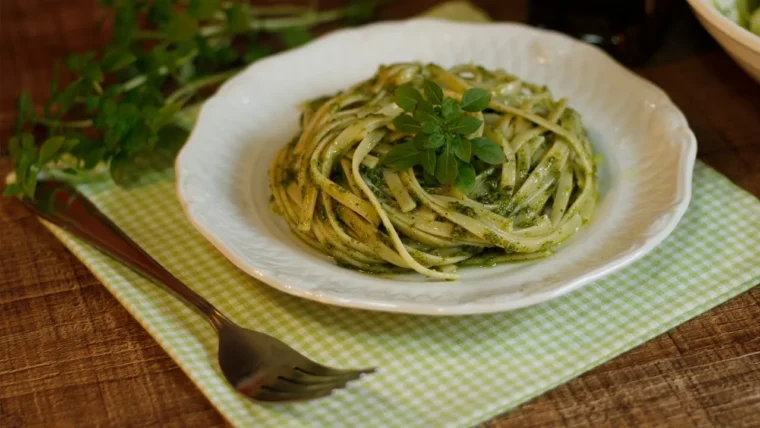
Pesto Pasta
Introduction
Pesto pasta is one of the most classic Italian recipes, loved all over the world. This dish is famous for its simplicity and bold flavor, which fits any occasion perfectly. Made with fresh, high-quality ingredients such as basil, garlic, pine nuts, and Parmesan cheese, pesto is a versatile and nutritious sauce. In this article, we will show you how to make delicious pesto pasta in 10 simple steps, plus explore the history of pesto and the benefits of its ingredients. Let’s get started?
Ingredients
To make delicious pesto pasta, you will need the following ingredients:
For the Pesto:
- 2 cups fresh basil leaves
- 1/2 cup pine nuts (or walnuts) (good quality)
- 2 garlic cloves, finely chopped
- 1/2 cup grated Parmesan cheese (good quality)
- 1/2 cup extra-virgin olive oil (good quality)
- Salt and pepper to taste
For the Pasta:
- 1.1 lb pasta (spaghetti, fusilli, or penne)
- 1 gallon water
- 1 Tbsp salt
Yield and Prep Time
- Yield: 4 servings
- Prep Time: 20 minutes
- Cook Time: 10 minutes
Directions
Step 1: Making the Pesto
Start by washing and thoroughly drying the basil leaves. In a food processor, add the basil, pine nuts, and finely chopped garlic. Process until you get a smooth mixture.
Step 2: Adding the Cheese and Olive Oil
With the processor still running, add the grated Parmesan cheese and slowly drizzle in the extra-virgin olive oil until you get a creamy sauce. Season with salt and pepper to taste.
Step 3: Cooking the Pasta
While you make the pesto, bring a large pot with 1 gallon of water and 1 tablespoon of salt to a boil over high heat. When the water comes to a boil, add the pasta and cook according to the package directions, until al dente.
Step 4: Draining the Pasta
Drain the pasta, reserving a cup of the cooking water. This will help adjust the consistency of the pesto sauce if needed.
Step 5: Tossing the Pasta with the Pesto
Transfer the drained pasta to a large bowl. Add the pesto and toss well until all the pasta is coated with the sauce. If needed, add a little of the reserved cooking water to reach the desired consistency.
Step 6: Adjusting the Seasoning
Taste the pesto pasta and adjust with more salt and pepper if needed. Remember that Parmesan cheese is already salty, so adjust carefully.
Step 7: Serving the Pasta
Transfer the pesto pasta to a serving platter. Garnish with a few fresh basil leaves and a little more grated Parmesan cheese, if you like.
Step 8: Side Dishes
Pesto pasta can be served with a fresh green salad and crusty Italian bread. These sides complement the dish perfectly, adding freshness and texture.
Step 9: Storing Leftovers
If there are leftovers, store the pesto pasta in an airtight container in the refrigerator for up to 2 days. Reheat in a skillet with a little olive oil or reserved cooking water to bring back the creaminess of the sauce.
Step 10: Varying the Recipe
Try adding halved cherry tomatoes, pieces of grilled chicken, or even shrimp to the pesto pasta for an even more complete and nutritious version.
History of Pesto
Pesto comes from the Liguria region in northwestern Italy, specifically the city of Genoa. The name “pesto” comes from the Italian verb “pestare,” meaning to pound or crush, referring to the traditional method of preparing the sauce in a mortar. Traditional Genoese pesto is made with basil, garlic, pine nuts, Parmesan cheese, Pecorino cheese, and olive oil. Over time, pesto gained worldwide popularity and many versions appeared, adapted to locally available ingredients.
Benefits of the Pesto Ingredients
Basil
Basil is an aromatic herb rich in antioxidants, vitamins, and minerals. It contains anti-inflammatory and antibacterial compounds that help strengthen the immune system and improve overall health.
Pine Nuts (or Walnuts)
Pine nuts are an excellent source of healthy fats, protein, and fiber. They also contain essential vitamins and minerals, such as vitamin E, magnesium, and zinc, which help improve heart and immune health.
Garlic
Finely chopped garlic is known for its medicinal properties, including the ability to improve cardiovascular health, lower blood pressure, and fight infections. It also adds a pungent, delicious flavor to the pesto.
Parmesan Cheese
Parmesan cheese is rich in calcium, protein, and vitamin A. It adds a salty, umami flavor to the pesto, plus important nutrients for bone and muscle health.
Extra-Virgin Olive Oil
Extra-virgin olive oil is a source of healthy monounsaturated fats, antioxidants, and anti-inflammatory compounds. It supports heart health, helping lower bad cholesterol (LDL) and raise good cholesterol (HDL).
Tips for Perfect Pesto Pasta
1. Use Fresh, Good-Quality Ingredients
Ingredient quality is essential for delicious pesto. Use fresh basil, good-quality Parmesan cheese, and extra-virgin olive oil.
2. Do Not Cook the Pesto
Pesto should be added to the pasta off the heat. Cooking pesto can make it lose its fresh, vibrant flavor.
3. Reserve the Cooking Water
Pasta cooking water contains starch, which helps emulsify the pesto sauce, making it creamier and helping it cling to the pasta.
4. Try Different Nuts
If you can’t find pine nuts, you can use walnuts, almonds, or Brazil nuts in the pesto. Each type of nut adds a unique flavor and texture to the sauce.
Pesto Pasta Variations
Arugula Pesto
Replace some or all of the basil with arugula for a pesto with a spicier, more distinctive flavor.
Cilantro Pesto
Replace the basil with cilantro and add a touch of lime for a more exotic, refreshing pesto.
Red Pesto
Add sun-dried tomatoes to the pesto for a red, slightly sweet version of the traditional sauce.
Nutrition Facts
| Nutrient | Amount per Serving |
|---|---|
| Calories | 450 kcal |
| Carbohydrates | 55 g |
| Protein | 10 g |
| Fat | 20 g |
| Fiber | 4 g |
| Vitamin A | 25% DV* |
| Vitamin C | 15% DV* |
| Calcium | 20% DV* |
| Iron | 15% DV* |
(*) Daily reference values based on a 2,000-calorie diet.
Conclusion
Making pesto pasta is a rewarding and delicious cooking experience. With fresh, high-quality ingredients, you can create a dish that is not only tasty but also nutritious. By following the steps and tips in this article, you will be on your way to making perfect pesto at home. Whether for a quick weeknight dinner or a special meal with friends and family, pesto pasta is always an excellent choice.
Share This Recipe
This pesto pasta recipe is perfect for sharing with friends and family. Try making this delight and surprise everyone with a nutritious dish full of flavor. Don’t forget to share this recipe with the people you love!
Did you like it? See more recipes like this on our website or join our Facebook group.


💬 Comentários (0)
Deixe sua teoria ou opinião sobre esta matéria.
Nenhum comentário por enquanto. Seja o primeiro a comentar!