
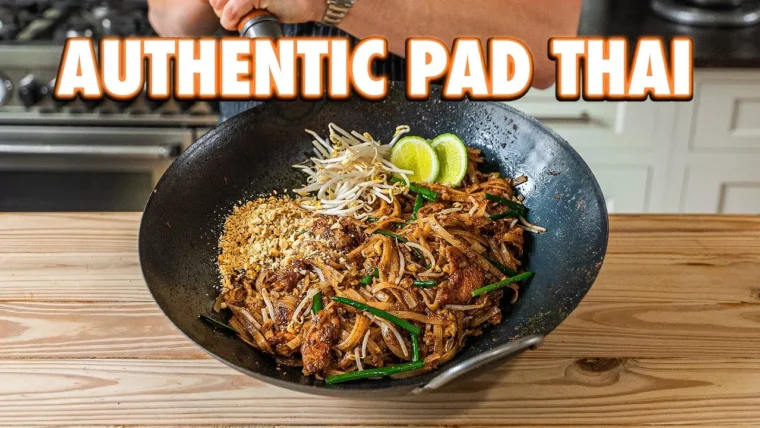
Pad Thai: Traditional Recipe Step by Step
Pad Thai is one of the most iconic dishes of Thai cuisine, known for its perfect combination of salty, sweet, sour, and spicy flavors. This rice-noodle dish is traditionally prepared with shrimp, chicken, or tofu, tossed with eggs, bean sprouts, peanuts, and a delicious sauce. In this article, we explore a detailed Pad Thai recipe, including tips, variations, and a nutrition table.
Ingredients for Pad Thai
Main Ingredients
-
7 oz rice noodles (good quality)
-
7 oz medium shrimp, cleaned and peeled (good quality)
-
3.5 oz chicken breast, cut into thin strips
-
2 eggs
-
1 cup bean sprouts
-
1/2 cup roasted peanuts, crushed
-
1/4 cup chopped fresh cilantro
-
2 tablespoons vegetable oil (good quality)
-
3 garlic cloves (finely chopped)
-
1 small red onion, sliced (finely chopped)
-
1/4 cup sliced scallions
-
1 lime cut into wedges, to serve
For the Pad Thai Sauce
-
3 tablespoons fish sauce
-
2 tablespoons palm sugar (or brown sugar)
-
1 tablespoon tamarind sauce
-
1 tablespoon soy sauce
-
1 teaspoon red pepper flakes (optional, for a spicy kick)
Yield and Prep Time
-
Yield: 4 servings
-
Prep time: 30 minutes
Step-by-Step Instructions
Step 1: Prepare the Ingredients
-
Cook the Noodles: Cook the rice noodles according to the package instructions until al dente. Drain and set aside.
-
Prepare the Seafood and Chicken: Season the shrimp and chicken with salt and pepper. Set aside.
Step 2: Make the Pad Thai Sauce
- Mix the Sauce Ingredients: In a small bowl, combine the fish sauce, palm sugar, tamarind sauce, soy sauce, and red pepper flakes. Stir until the sugar is completely dissolved.
Step 3: Cook the Pad Thai
-
Heat the Oil: In a wok or large skillet, heat the vegetable oil over medium-high heat.
-
Sauté the Garlic and Onion: Add the finely chopped garlic and sliced onion, sautéing until fragrant and lightly golden.
-
Add the Chicken: Add the chicken strips and cook until fully cooked through and golden. Remove from the wok and set aside.
-
Add the Shrimp: In the same wok, add the shrimp and cook until pink and opaque. Remove and set aside with the chicken.
Step 4: Assemble the Pad Thai
-
Cook the Eggs: Crack the eggs into the wok and scramble until just cooked but still soft.
-
Add the Noodles and Sauce: Add the cooked rice noodles and pour the prepared sauce over them. Toss well so the noodles absorb the sauce.
-
Combine the Ingredients: Add the chicken, shrimp, bean sprouts, and half of the crushed peanuts. Gently toss until everything is well combined and heated through.
Step 5: Finish and Serve
-
Add the Scallions and Cilantro: Add the scallions and chopped fresh cilantro. Toss gently.
-
Serve: Transfer the Pad Thai to individual plates, sprinkle with the remaining peanuts, and garnish with lime wedges.
-
Serving Tip: Serve immediately with the lime wedges on the side for squeezing over the Pad Thai.
Tips and Variations
Tips for a Perfect Pad Thai
-
Choose Quality Ingredients: Use fresh, good-quality ingredients to guarantee the best flavor.
-
Rice Noodles: Do not overcook the rice noodles, as they will keep cooking in the wok.
-
Tamarind Sauce: Tamarind sauce is essential for authentic Pad Thai flavor. It can be found in Asian grocery stores.
Recipe Variations
-
Vegetarian Pad Thai: Replace the shrimp and chicken with firm tofu cut into cubes. Add more vegetables, such as carrots and bell peppers.
-
Beef Pad Thai: Use thin slices of beef or pork instead of the shrimp and chicken.
-
Seafood Pad Thai: Add a mix of seafood, such as scallops and squid, for an even richer seafood version.
Nutritional Benefits of Pad Thai
Shrimp
Shrimp is an excellent source of lean protein and is rich in vitamins and minerals such as vitamin B12, iron, and zinc.
Chicken
Chicken breast is a lean meat rich in protein and low in fat, making it a healthy option for many recipes.
Peanuts
Peanuts are rich in protein, healthy fats, and fiber. They also provide a good amount of essential vitamins and minerals, such as vitamin E and magnesium.
Rice Noodles
Rice noodles are a good source of carbohydrates, which provide sustained energy. They are naturally gluten-free, making them suitable for people with gluten sensitivity.
Vegetables
Bean sprouts, onion, garlic, and cilantro add fiber, vitamins, and minerals to Pad Thai, making it a balanced and nutritious dish.
Pad Thai Nutrition Facts
Here is an approximate nutrition table for one serving of Pad Thai (1/4 of the recipe):
| Component | Amount per Serving (100g) |
|---|---|
| Calories | 300 |
| Protein | 20g |
| Carbohydrates | 35g |
| Fat | 10g |
| Fiber | 3g |
| Calcium | 5% DV |
| Iron | 8% DV |
Conclusion
Pad Thai is a delicious and versatile Thai recipe that can be adapted in many ways to suit your personal taste. With fresh, good-quality ingredients, you can prepare an authentic Pad Thai that will impress your family and friends. Try this recipe and enjoy a true Thai feast!
Share This Recipe
If you enjoyed this Pad Thai recipe, share it with your friends and family. Spread the joy of cooking and savoring a delicious and nutritious meal!
Liked it? See more recipes like this on our site or join our Facebook group.


💬 Comentários (0)
Deixe sua teoria ou opinião sobre esta matéria.
Nenhum comentário por enquanto. Seja o primeiro a comentar!