
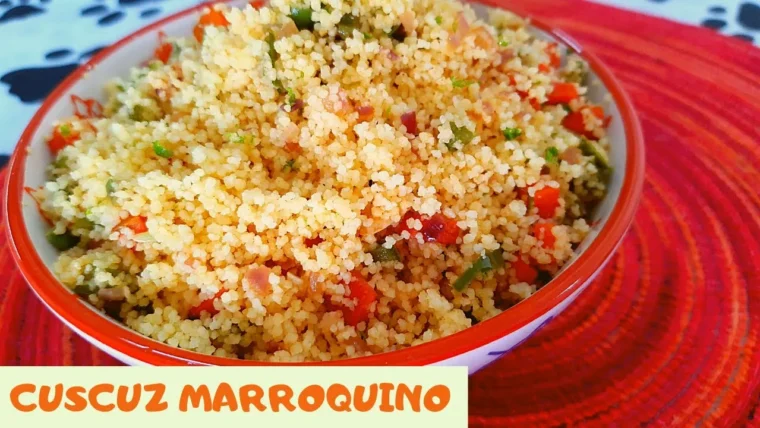
Moroccan Couscous: Traditional and Delicious Recipe
Moroccan Couscous: Traditional and delicious recipe is a North African delicacy, especially popular in Morocco. Made from wheat semolina, Moroccan couscous is versatile, healthy, and extremely tasty. It can be served as a side dish, main course, or even dessert. In this article, we will share a complete Moroccan couscous recipe, including yield, prep time, variation tips, and a detailed nutrition table. Get ready to discover all the secrets of this delicious dish!
Ingredients
To make it, you will need the following ingredients:
Basic Ingredients
- 1 cup couscous
- 1 cup boiling water
- 1 tablespoon good-quality olive oil
- 1/2 teaspoon salt
Ingredients for Traditional Moroccan Couscous
- 1 medium onion, finely chopped
- 2 garlic cloves, minced
- 1 large carrot, cut into small cubes
- 1 medium zucchini, cut into small cubes
- 1/2 red bell pepper, cut into small cubes
- 1/2 cup raisins
- 1/2 cup cooked chickpeas
- 1/4 cup toasted chopped almonds
- 1 teaspoon ground cumin
- 1 teaspoon ground cinnamon
- 1/2 teaspoon ground turmeric
- Salt and black pepper to taste
- Fresh chopped parsley, to garnish
Directions
Step 1: Prepare the Couscous
- Place the couscous in a large bowl.
- Add the boiling water, olive oil, and salt.
- Stir well, cover the bowl, and let rest for about 5 minutes, until the couscous has absorbed all the water.
- Fluff the grains with a fork, making sure there are no lumps.
Step 2: Prepare the Ingredients
- In a large pan, heat a little olive oil over medium heat.
- Add the onion and garlic and saute until soft and translucent.
- Add the carrot and red bell pepper and cook for about 5 minutes.
- Add the zucchini and cook 3 more minutes, or until the vegetables are tender.
Step 3: Season and Cook
- Add the cumin, cinnamon, and turmeric to the vegetables and mix well.
- Add the raisins, chickpeas, and almonds.
- Season with salt and black pepper to taste.
- Cook 2 more minutes, stirring occasionally, until everything is well combined and heated through.
Step 4: Mix with the Couscous
- Add the seasoned vegetables to the prepared couscous.
- Gently mix with a fork so all grains are well combined with the vegetables.
- Adjust the seasoning if needed.
Step 5: Finish and Serve
- Garnish with fresh chopped parsley.
- Serve the Moroccan couscous hot or at room temperature.
Yield and Prep Time
- Yield: 4 to 6 servings
- Prep Time: 20 minutes
- Cook Time: 15 minutes
- Total Time: 35 minutes
Tips for Perfect Couscous
Choosing the Ingredients
For authentic couscous, use fresh, good-quality ingredients. Vegetables should be fresh and firm, and spices should be from a good source for the best flavor.
Fluffing the Grains
After hydrating the couscous, be sure to fluff the grains well with a fork so they stay separate and light. This gives the dish a pleasant texture.
Seasonings and Spices
Spices are essential to Moroccan couscous flavor. Try adjusting the amounts of cumin, cinnamon, and turmeric to your taste. Other seasonings such as ginger and paprika can also be added for flavor variations.
Protein Variations
Besides chickpeas, you can add other proteins to Moroccan couscous, such as grilled chicken, lamb, or fish. These variations make the dish even more complete and nutritious.
Nutrition Facts
Below is the nutrition table for the couscous recipe:
| Component | Amount per serving (1/6 of recipe) |
|---|---|
| Calories | 250 kcal |
| Carbohydrates | 40 g |
| Protein | 6 g |
| Total Fat | 8 g |
| Saturated Fat | 1 g |
| Trans Fat | 0 g |
| Dietary Fiber | 5 g |
| Sodium | 400 mg |
| Sugars | 6 g |
Couscous Benefits
Rich in Nutrients
Moroccan couscous is an excellent source of complex carbohydrates for sustained energy. It is also rich in fiber, which aids digestion and promotes fullness.
A Source of Protein
Adding chickpeas and almonds to Moroccan couscous raises the protein content, making it a complete and nutritious meal, especially for vegetarians and vegans.
Low in Fat
This Moroccan couscous recipe is low in saturated fat and contains no trans fat, a healthy option for a balanced diet.
Versatility
Moroccan couscous can be served many ways: as a side dish, main course, or even as the base of a nutritious salad. Its versatility suits different tastes and dietary needs.
History of Moroccan Couscous
Origin
Couscous is a traditional North African dish with deep roots in Morocco, Algeria, and Tunisia. It was originally made by hand from wheat semolina, rolling the grains between the palms until small spheres formed.
Evolution
Over time, couscous became popular in many parts of the world, particularly France and the Mediterranean region. Today it is enjoyed globally for its versatility and ease of preparation.
Moroccan Tradition
In Morocco, couscous is often served at big celebrations and family meals. It is traditionally prepared in a couscoussier, a special utensil that steams the couscous, keeping its light, fluffy texture.
Regional Moroccan Couscous Variations
Moroccan Couscous with Lamb
One of the most traditional Moroccan couscous variations is made with lamb. The meat is seasoned with a spice blend and slow-cooked until tender and juicy. This dish is often served on special occasions and celebrations.
Moroccan Couscous with Seafood
Another popular variation is Moroccan couscous with seafood, such as shrimp, mussels, and squid. Typical of coastal regions, it combines ocean flavors with the delicate texture of couscous.
Vegetarian Moroccan Couscous
For a vegetarian option, Moroccan couscous can be prepared with seasonal vegetables such as pumpkin, eggplant, cauliflower, and peas. This dish is colorful, nutritious, and full of flavor.
Storage and Reheating Tips
Storage
Store Moroccan couscous in an airtight container in the refrigerator for up to 3 days. Make sure it is completely cool before storing to avoid condensation.
Reheating
To reheat Moroccan couscous, place it in a pan over low heat, stirring occasionally until heated through. You can also reheat in the microwave, stirring halfway for even heat
ing.
Freezing
To freeze Moroccan couscous, do so in individual portions for easier thawing. Freeze in airtight plastic bags or suitable containers for up to 2 months. To thaw, refrigerate for a few hours or heat directly on the stove over low heat.
Frequently Asked Questions About Moroccan Couscous
1. Can I use whole-wheat couscous for this recipe?
Yes, you can replace traditional Moroccan couscous with whole-wheat couscous. Whole-wheat couscous is richer in fiber and nutrients, making the dish even healthier.
2. How do I make a gluten-free Moroccan couscous?
For a gluten-free version, replace Moroccan couscous with quinoa or cauliflower rice. The method and seasonings stay the same.
3. Can I add animal protein to Moroccan couscous?
Yes, you can add animal proteins such as grilled chicken, lamb, or seafood to Moroccan couscous. This makes the dish heartier and suitable as a main meal.
4. What are the best side dishes for Moroccan couscous?
Moroccan couscous pairs well with fresh salads, seasoned yogurt, pita bread, and hummus. These sides complement the main dish flavors and textures.
5. Can I make Moroccan couscous ahead of time?
Yes, you can prepare Moroccan couscous ahead of time and refrigerate it. It can be reheated on the stove or in the microwave before serving.
Final Thoughts
Moroccan couscous is a versatile, delicious, and nutritious recipe, perfect for any occasion. With simple ingredients and relatively quick prep, you can enjoy a traditional Moroccan dish everyone will love. Try making this recipe at home and share it with friends so everyone can taste this delight.
If you enjoyed this recipe, share it with friends so they can also enjoy delicious Moroccan couscous!
Liked it? Find more recipes like this on our website or join our group on Facebook


💬 Comentários (0)
Deixe sua teoria ou opinião sobre esta matéria.
Nenhum comentário por enquanto. Seja o primeiro a comentar!