
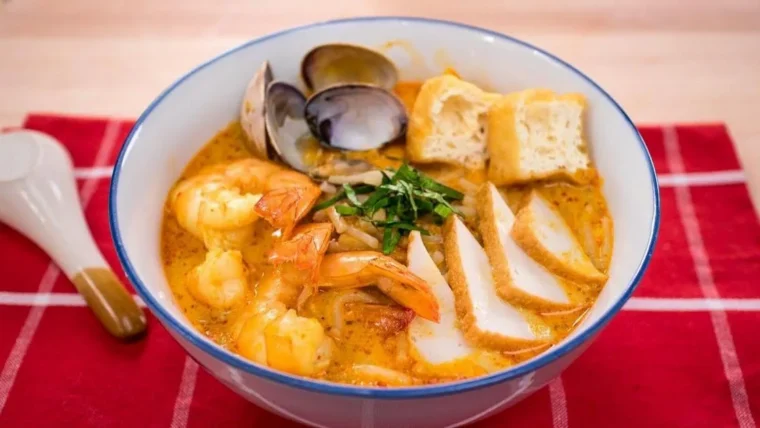
Have you heard of laksa? This Asian dish combines bold flavors with a blend of spices and fresh ingredients. Discover the secrets behind this delicious dish and how to prepare it at home.
What Is Laksa?
Laksa is a spicy noodle soup from Malaysia and Singapore, celebrated for its unique combination of flavors and distinctive ingredients. This exotic dish is usually divided into two main categories: Curry Laksa and Assam Laksa. Each type has regional variations that add even more diversity to the dish. Curry Laksa has a rich, creamy coconut broth, while Assam Laksa is known for its sour, spicy tamarind broth.
Common Laksa Ingredients
Laksa ingredients tend to vary by region, but some essential elements remain consistent:
- Noodles: Both thick rice noodles, known as laksa noodles, and wheat noodles are used.
- Proteins: Chicken, shrimp, tofu and fish are frequent choices.
- Broth: The broth base can be coconut milk (for Curry Laksa) or tamarind (for Assam Laksa).
- Spice pastes: They usually contain ginger, garlic, mace and dried chilies.
Regional Laksa Varieties
Katong Laksa (Singapore)
Katong Laksa is popular in Singapore and stands out for its thick curry broth with coconut milk and shrimp. The noodles are cut into small pieces, making it easy to eat without chopsticks. This style of laksa is also known for its slightly sweet touch.
Penang Assam Laksa (Malaysia)
Penang Assam Laksa offers contrasting flavors with its sour tamarind broth and mackerel. The dish is served with thin slices of cucumber, red onion and mint, adding freshness and crunch.
Lemak Laksa
Lemak laksa is another variety found in Malaysia that features coconut milk and is known for its slightly sweet, creamy broth. The word lemak refers to the richness of coconut milk and is a common term in Malay cuisine. Frequent ingredients include fish, shrimp and egg.
How to Make Laksa at Home
Making laksa may seem intimidating, but with a little preparation you can recreate this delicious dish at home.
Preparing the Broth
For the broth base, start by heating oil in a pot and adding spice paste until fragrant. Add chicken or fish stock and bring to a boil. Once the broth is boiling, stir in coconut milk or tamarind, depending on the variety of laksa you are making.
Cooking the Noodles
Cook the rice noodles in boiling water until tender. Drain and set aside. In some versions, you can add the noodles directly to the broth so they absorb more flavor.
Adding Proteins and Other Ingredients
Your main ingredients such as shrimp, chicken or tofu should be cooked in the broth. Add vegetables such as bean sprouts, cucumber and cilantro leaves on top. Do not forget to season with fresh cilantro leaves, red chili and scallions.
Health Benefits
Rich in Protein and Nutrients: Ingredients such as chicken, fish and tofu provide essential protein and omega-3s.
Antioxidant Spices: Many seasonings in laksa paste, such as ginger and garlic, are rich in antioxidants that fight inflammation.
Tips and Tricks for the Perfect Laksa
Freshness Is Key: Always use fresh ingredients for authentic laksa flavor.
Balancing Flavors: Balancing sweet, sour, salty and spicy is crucial for the perfect taste. Adjust the seasonings as needed.
Simmer the Broth: Let the broth boil longer so all the flavors blend well.
Where to Find Ready-Made Laksa
In large cities you can find restaurants specializing in Asian cuisine that serve authentic laksa. Cities such as Kuala Lumpur and Singapore are known for their food courts and street markets where laksa is often a highlight.
Exploring the World of Laksa
In each Southeast Asian country, laksa reflects some of the history and culture behind its ingredients and techniques. Exploring different versions can be a great way to better understand this rich culinary tradition. Visiting local markets and tasting laksa in different places can offer a new perspective on this classic dish.
- Singapore: Best experience at Lau Pa Sat Market.
- Malaysia: Visit the Penang street food market.
- Indonesia: The famous Betawi laksa.
As you explore the world of laksa, be prepared to marvel at the variety of each version and the complex world of Asian flavors.


💬 Comentários (0)
Deixe sua teoria ou opinião sobre esta matéria.
Nenhum comentário por enquanto. Seja o primeiro a comentar!