
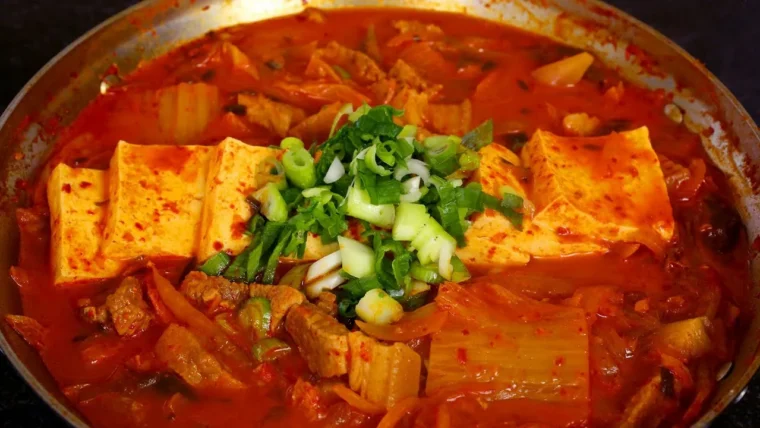
Kimchi Jjigae (Korean Kimchi Stew): Traditional Step-by-Step Recipe
Introduction
The Kimchi Jjigae is one of the most iconic dishes in Korean cuisine, known for its spicy, comforting, savory flavor. This kimchi soup, often compared to a stew, is a staple in many Korean homes and is enjoyed both on everyday occasions and on special moments. Made with fermented kimchi, tofu, pork or seafood, and a variety of other ingredients, Kimchi Jjigae delivers a deep and complex flavor loved by many.
In this article, we explore the history of Kimchi Jjigae, its cultural importance, and provide a detailed recipe so you can make it at home. We also cover possible variations and how to serve this delicious soup. In addition, we include a nutrition table for those who want to watch their diet. Let’s dive into the richness of Kimchi Jjigae and find out why it is such a special dish.
History and Cultural Importance of Kimchi Jjigae
Origin and Evolution
The Kimchi Jjigae has a long history going back centuries, as an integral part of Korean cuisine. The soup is traditionally made with aged kimchi, which gives a deeper, more pronounced flavor. Using aged kimchi is common practice, because fresh kimchi can be milder, while aged kimchi develops a more acidic and complex flavor, ideal for soups.
The word jjigae refers to any type of soup or stew in Korean cuisine, while kimchi is the famous fermented vegetable dish, usually made from cabbage or radish. Kimchi Jjigae combines these two elements to create a meal that is both nutritious and delicious.
Kimchi Jjigae in Korean Culture
Kimchi Jjigae is more than just a dish; it is a cultural expression. In many Korean homes, it is a common dish at meals, often served with rice and other side dishes. The simplicity of its ingredients and its comforting flavor make it a popular choice for family meals and sharing with friends. It is also a dish that symbolizes thrift and tradition, because it uses kimchi that may be left over from other meals.
Kimchi Jjigae Recipe
Here is an authentic Kimchi Jjigae recipe for you to make and enjoy at home. The quality of the ingredients is crucial for an authentic flavor, so choose fresh, high-quality ingredients whenever possible.
Ingredients
-
Kimchi: 10.5 oz (300 g, good quality), chopped into small pieces
-
Pork: 7 oz (200 g), cut into thin slices
-
Tofu: 7 oz (200 g), cut into cubes
-
Onion: 1 medium onion (finely chopped)
-
Garlic: 3 cloves (finely chopped)
-
Gochugaru (Korean chili powder): 1 tbsp
-
Gochujang (Korean chili paste): 1 tbsp
-
Soy sauce: 2 tbsp
-
Sesame oil: 1 tbsp
-
Water: 3 cups (720 ml)
-
Scallions: 2 units, cut into 3/4-inch pieces
-
Shiitake mushrooms: 3.5 oz (100 g), sliced
-
Sugar: 1 tsp (optional)
-
Vegetable oil: 1 tbsp (olive oil also works)
-
Salt and black pepper: to taste
Directions
Ingredient Prep
-
Prepping the Kimchi:
-
Cut the kimchi into small pieces and reserve the kimchi juice.
-
Marinating the Pork:
-
In a bowl, mix the pork with the finely chopped garlic, the soy sauce and the sesame oil. Let marinate for at least 15 minutes.
-
Prepping the Tofu and Mushrooms:
-
Cut the tofu into cubes and slice the shiitake mushrooms.
Cooking
-
Sautéing the Ingredients:
-
In a large pot, heat the vegetable oil (olive oil also works) over medium heat. Add the finely chopped onion and sauté until translucent.
-
Adding the Kimchi and Pork:
-
Add the kimchi and the marinated pork to the pot. Cook for about 5 minutes, stirring occasionally, until the meat is browned.
-
Adding Liquids and Seasonings:
-
Add the kimchi juice, gochugaru, gochujang, water and, if desired, the sugar. Mix well.
-
Simmering the Soup:
-
Bring the soup to a boil, reduce the heat and simmer for about 15-20 minutes. Add the tofu, mushrooms and scallions in the last 5 minutes of cooking.
-
Adjusting the Flavor:
-
Taste the soup and adjust the seasoning with salt and black pepper as needed.
Yield and Prep Time
-
Yield: Serves 4 people.
-
Prep time: 15 minutes for the initial preparation.
-
Cook time: 25 minutes.
-
Total time: About 40 minutes.
Kimchi Jjigae Variations
Kimchi Jjigae is a versatile dish and can be adapted in several ways:
-
With Seafood: Replace the pork with seafood, such as shrimp or mussels, for a lighter, ocean-style version.
-
Vegetarian Version: Use mushrooms and tofu as the main protein sources, omitting the pork.
-
With Spam or Sausages: A popular modern version includes spam or sausages, adding a touch of flavor and texture.
Side Dishes and Serving Suggestions
Kimchi Jjigae is usually served with white rice and a variety of Korean side dishes, known as banchan. Some of the most popular sides include:
-
Fresh kimchi: To complement the flavor of the soup.
-
Namul: Cooked and seasoned vegetables.
-
Pajeon: Korean scallion pancake.
Nutrition Facts
| Nutrient | Amount per serving (approx.) |
|---|---|
| Calories | 250 |
| Carbohydrates | 15g |
| Protein | 20g |
| Fat | 12g |
| Dietary Fiber | 3g |
| Sugars | 5g |
| Sodium | 900mg |
| Calcium | 5% DV* |
| Iron | 10% DV* |
*DV: Daily Values based on a 2,000-calorie diet.
Conclusion
The Kimchi Jjigae is a soup that captures the flavor and tradition of Korea. With its fermented-kimchi base and a variety of ingredients, this soup is perfect for any occasion, from a family dinner to a comforting meal on a cold day. The balance of spicy, salty and umami flavors makes Kimchi Jjigae a unique and unforgettable dish.
Share this recipe
If you enjoyed this Kimchi Jjigae recipe, share it with your friends and family! They will love trying this Korean soup full of flavor and tradition.
Enjoyed it? See more recipes like this on our website or join our group on Facebook.


💬 Comentários (0)
Deixe sua teoria ou opinião sobre esta matéria.
Nenhum comentário por enquanto. Seja o primeiro a comentar!