
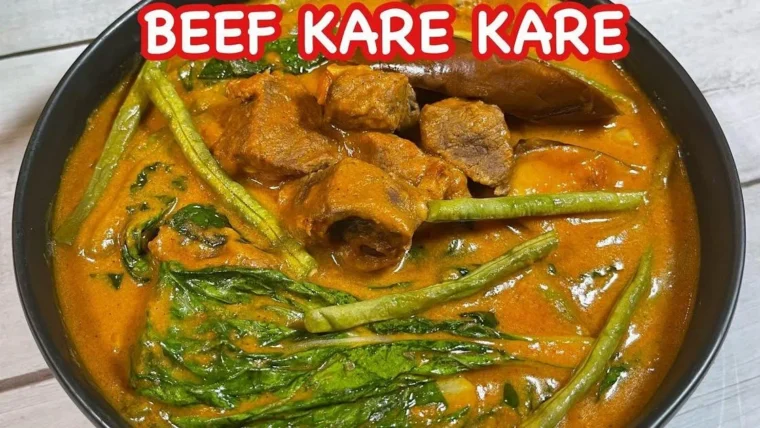
Kare-Kare is an iconic dish of Filipino cuisine made with rich ingredients typical of the region. With a unique combination of flavors and textures, this delicacy is always a pleasant surprise. Let us explore the secrets of this dish and how it can be prepared at home.
Kare-Kare: Flavorful and Comforting
Kare-Kare is a delicious, flavor-packed dish that is a treasure of Filipino cuisine. Its preparation brings together a variety of unique ingredients that blend harmoniously into a meal that is both rich and comforting.
Kare-Kare is traditionally made with oxtail or beef tripe, although there are versions using pork or chicken. The meat is slowly cooked until tender and juicy, absorbing all the flavors of the seasonings and vegetables.
Kare-Kare Ingredients
The ingredients are key to the authenticity of the dish. Here are the main ones:
- Oxtail, tripe, or pork/chicken: The protein base of the dish.
- Peanut paste: One of the star ingredients, giving the dish its thickness and signature flavor.
- Toasted ground rice: Added to thicken the sauce and deepen the flavor.
- Bell pepper: Used for color and flavor.
- Green jackfruit: A bitter ingredient that balances the sweetness and richness of the sauce.
- Eggplant: Adds texture and soaks up the sauce beautifully.
- Bamboo shoots: Add a crunchy touch to the dish.
- Beef broth: The liquid base that creates a flavorful, thick sauce.
Preparing Kare-Kare
Preparing this dish can be divided into several steps, each one crucial for a perfect final result.
Cooking the Meat
First, wash the chosen meat well. Place it in a large pot and cover with water. Cook for about one hour, or until the meat is tender. Skim off any excess fat that rises to the surface.
Making the Peanut Sauce
While the meat cooks, prepare the peanut sauce by mixing the peanut paste with the toasted ground rice and a little of the beef broth. Stir until smooth and uniform.
Adding the Vegetables
Cut vegetables such as eggplant, bell pepper, and green jackfruit into large pieces. In a separate pan, sauté these vegetables with garlic and onion until tender. Add the bamboo shoots at the end.
Cultural Cuisine
Kare-Kare is more than just a dish; it is a celebration of Filipino culture. It is often served on special occasions such as family gatherings, celebrations, and festivities.
Traditionally, Kare-Kare is served with bagoong, a fermented shrimp paste that adds a unique salty flavor, perfectly complementing the rich, sweet peanut sauce.
Regional Variations
Although traditional Kare-Kare is made with oxtail, there are regional variations using different ingredients, reflecting the culinary diversity of the Philippines.
- Beef Kare-Kare (Kare-Kareng Baka): Usually made with oxtail.
- Pork Kare-Kare: Uses pork cuts such as ears and snout.
- Chicken Kare-Kare: Lighter, ideal for those who prefer to avoid red meat.
- Vegetarian Kare-Kare: Replaces the animal protein with tofu or extra vegetables.
Nutrition and Benefits
One reason Kare-Kare is so loved, besides its flavor, is its nutritional value. With protein, vitamins, and essential minerals, it can be a well-balanced meal.
- Protein: The meats provide plenty of protein, essential for tissue growth and repair.
- Fiber: The vegetables add fiber, aiding digestion.
- Vitamins: Ingredients such as eggplant and bell pepper are rich in vitamins.
- Healthy fats: Coming from the peanut paste.
How to Serve Kare-Kare
The dish is usually served hot, alongside a bowl of white rice and bagoong. Here are some tips for serving Kare-Kare perfectly.
- Serve it hot: Make sure the Kare-Kare is piping hot when served.
- Sides: Rice and bagoong are essential.
- Garnish: It can be finished with bamboo shoots or sliced bell pepper for an inviting look.
Storage Tips
If you plan to make a large batch, it is essential to know how to store it properly. Kare-Kare can be refrigerated and reheated without losing flavor.
- Refrigeration: Store in an airtight container for up to 3 days.
- Freezing: It can be frozen for up to 3 months. Thaw in the refrigerator before reheating.
- Reheating: Reheat over low heat so the sauce does not separate.
History of Kare-Kare
The origin of Kare-Kare is debated, but many believe it has Moorish roots and was influenced by other Asian cuisines. It may have started as a way to use less prized cuts of meat, turning them into a sumptuous dish.
Cultural Importance
Kare-Kare is not just a meal but a symbol of tradition and togetherness. In many Filipino families, the dish is a link between generations that keeps the cultural heritage alive.
It is common to see families gathering on weekends or holidays to prepare and enjoy a dish of Kare-Kare together.


💬 Comentários (0)
Deixe sua teoria ou opinião sobre esta matéria.
Nenhum comentário por enquanto. Seja o primeiro a comentar!