
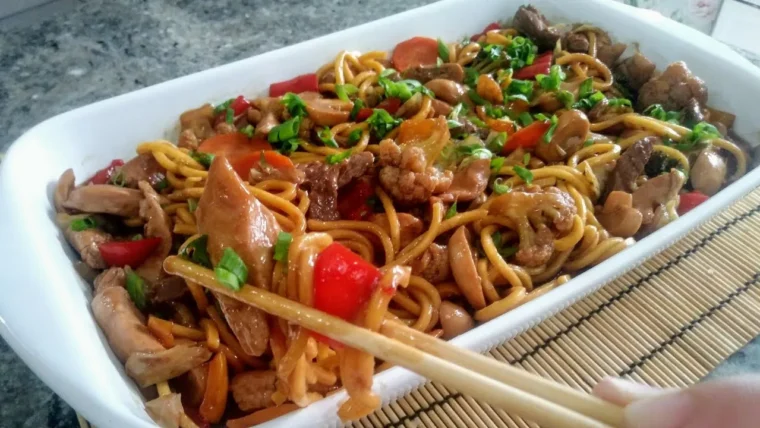
2 Ways to Make Yakisoba with Few Ingredients
2 Ways to Make Yakisoba with few ingredients is a widely loved Japanese dish known for its delicious flavor and versatility. Traditionally, it combines stir-fried noodles with a variety of vegetables, meats, and a savory sauce. Even with few ingredients, though, you can prepare an equally delicious version. In this article, we present two ways to make yakisoba with few ingredients, ideal for anyone seeking convenience without giving up flavor.
2 Ways to Make Yakisoba – What Is Yakisoba?
Yakisoba, which literally means “fried noodles”, is a Japanese dish rooted in Chinese cuisine. It is made with buckwheat noodles, vegetables, and meat, all seasoned with a soy-based sauce. Although there are many variations, the essence of yakisoba is the combination of umami flavors with a slightly crisp yet tender texture.
Essential Yakisoba Ingredients
Even with a short ingredient list, you can make delicious yakisoba. Here are some of the essential ingredients:
- Yakisoba Noodles: They can be replaced with instant noodles or spaghetti in a simpler version.
- Vegetables: Onion, carrot, and cabbage are the most common vegetables.
- Proteins: Pork, chicken, or shrimp.
- Yakisoba Sauce: A soy-based sauce that can be homemade or store-bought.
Now, let’s get to the two ways to make yakisoba with few ingredients.
Recipe 1: Simple Classic Yakisoba
Ingredients
- 7 oz (200 g) yakisoba noodles (or instant noodles)
- 1 medium carrot, cut into thin strips
- 1 medium onion, cut into very thin slices
- 7 oz (200 g) chicken strips (or pork)
- 1/4 small cabbage, cut into strips
- 2 tablespoons good-quality soy sauce
- 1 tablespoon sesame oil (or vegetable oil)
- 1 teaspoon sugar
- Salt and pepper to taste
Directions
- Cook the Noodles: Cook the noodles according to the package directions. Drain and set aside.
- Prep the Ingredients: While the noodles cook, prep the vegetables and cut the chicken into thin strips.
- Sear the Chicken: Heat the sesame oil in a large skillet or wok. Add the chicken and sear until golden. Season with salt and pepper.
- Add the Vegetables: Add the onion and carrot to the skillet. Sauté for about 3 minutes or until they begin to soften.
- Stir in the Cabbage: Add the cabbage and keep sautéing for 2 more minutes.
- Add the Noodles and Sauce: Add the cooked noodles to the skillet. Mix well. Add the soy sauce and sugar. Toss until all ingredients are well combined and heated through.
- Adjust the Seasoning: Taste and adjust the salt and pepper if needed.
- Serve: Serve hot, garnished with sesame seeds if desired.
Nutrition Facts (per 8.8 oz / 250 g serving)
| Nutrient | Amount |
|---|---|
| Calories | 350 kcal |
| Carbohydrates | 45 g |
| Protein | 20 g |
| Total Fat | 10 g |
| Saturated Fat | 2 g |
| Trans Fat | 0 g |
| Cholesterol | 50 mg |
| Sodium | 800 mg |
| Fiber | 3 g |
| Sugars | 5 g |
| Vitamin A | 3000 IU |
| Vitamin C | 30 mg |
| Calcium | 40 mg |
| Iron | 2 mg |
Recipe 2: Vegetarian Yakisoba
Ingredients
- 7 oz (200 g) yakisoba noodles (or instant noodles)
- 1 medium carrot, cut into thin strips
- 1 medium onion, cut into thin slices
- 1/4 small cabbage, cut into strips
- 1 red bell pepper, cut into thin strips
- 1 small zucchini, cut into half-moons
- 2 tablespoons good-quality soy sauce
- 1 tablespoon sesame oil (or vegetable oil)
- 1 teaspoon sugar
- Salt and pepper to taste
Directions
- Cook the Noodles: Cook the noodles according to the package directions. Drain and set aside.
- Prep the Ingredients: While the noodles cook, prep the vegetables.
- Sauté the Vegetables: Heat the sesame oil in a large skillet or wok. Add the onion and carrot. Sauté for about 3 minutes or until they begin to soften.
- Add the Bell Pepper and Zucchini: Add the bell pepper and zucchini. Sauté for 2-3 more minutes.
- Stir in the Cabbage: Add the cabbage and keep sautéing for 2 more minutes.
- Add the Noodles and Sauce: Add the cooked noodles to the skillet. Mix well. Add the soy sauce and sugar. Toss until all ingredients are well combined and heated through.
- Adjust the Seasoning: Taste and adjust the salt and pepper if needed.
- Serve: Serve hot, garnished with sesame seeds if desired.
Nutrition Facts (per 8.8 oz / 250 g serving)
| Nutrient | Amount |
|---|---|
| Calories | 300 kcal |
| Carbohydrates | 50 g |
| Protein | 8 g |
| Total Fat | 6 g |
| Saturated Fat | 1 g |
| Trans Fat | 0 g |
| Cholesterol | 0 mg |
| Sodium | 600 mg |
| Fiber | 5 g |
| Sugars | 6 g |
| Vitamin A | 3500 IU |
| Vitamin C | 40 mg |
| Calcium | 50 mg |
| Iron | 2 mg |
Tips for Perfect Yakisoba
Use Fresh Ingredients
Whenever possible, use fresh vegetables to guarantee maximum flavor and nutrition. Frozen vegetables can be used in a pinch, but fresh ones deliver superior texture and flavor.
Cut the Ingredients Evenly
To ensure even cooking, cut all vegetables and proteins into similar sizes. This also makes it easier to toss and distribute flavors.
Control the Heat
When sautéing, use high heat to quickly sear in flavors and keep the vegetables crisp. This also helps prevent the ingredients from getting soggy.
Adjust the Cooking Times
Add the ingredients in the right order, starting with the ones that take longest to cook (like carrot and onion) and finishing with the most delicate ones (like cabbage and zucchini).
Customize the Sauce
Although soy sauce is a basic ingredient, you can customize your yakisoba’s flavor by adding ingredients such as toasted sesame oil, rice vinegar, grated ginger, or minced garlic.
Vary the Proteins
Beyond chicken and pork, you can try other protein sources such as beef, shrimp, tofu, or even eggs.
Nutritional Benefits of Yakisoba
Rich in Nutrients
Yakisoba can be a complete, balanced meal, rich in protein, carbohydrates, and fiber. The vegetables provide a good dose of vitamins and minerals, while the noodles supply long-lasting energy.
Low in Calories
When prepared with fresh ingredients in controlled amounts, yakisoba can be a low-calorie meal option, suitable for anyone trying to maintain or lose weight.
Versatile and Customizable
The beauty of yakisoba lies in its versatility. You can easily adapt it to different dietary preferences, whether vegetarian, vegan, or low-carb.
Conclusion
Yakisoba is a delicious, versatile choice for any meal, offering the chance to create flavorful dishes with few ingredients. The recipes presented show how to prepare a classic chicken yakisoba and a vegetarian yakisoba, both keeping the balance between simplicity and flavor.
These minimalist versions of yakisoba are ideal for anyone looking for quick, healthy, budget-friendly meals without compromising taste and nutritional quality. With basic ingredients and simple techniques, you can enjoy an authentic, nutritious dish that pleases every palate. Try these recipes in your kitchen and discover how easy and rewarding it is to prepare homemade yakisoba!
By following the suggested tips and variations, you can customize your meals to your preferences and dietary needs, making yakisoba a regular addition to your cooking repertoire. Enjoy the versatility and nutritional benefits of this classic Japanese dish in its simplest, tastiest form.
Liked it? See more recipes like this on our website or join our group on Facebook


💬 Comentários (0)
Deixe sua teoria ou opinião sobre esta matéria.
Nenhum comentário por enquanto. Seja o primeiro a comentar!