Vatapá: Traditional Bahian Recipe Step by Step
Entradas-e-petiscos
Glossário Culinário
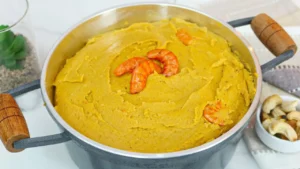
Vatapá is a full-bodied, aromatic cream from Bahia cooking, prepared with day-old bread or flour, cashews, peanuts, coconut milk, dendê oil and seasonings such as onion, garlic, ginger and pepper. In the best-known version, it carries dried shrimp, which reinforces the dish’s striking flavor.
Vatapá has a creamy, velvety texture, somewhere between a thick puree and a stew. The yellow-orange color comes from dendê, and the flavor combines the sweetness of coconut with the earthy touch of peanuts and cashews. The watchpoints in cooking are:
In Bahia, vatapá appears alongside white rice, farofa and caruru, forming the dish of festivals and street stalls. It is also the traditional filling of acarajé, combined with vinaigrette, dried shrimp and pepper. At home, it works as a creamy sauce for grilled fish, cooked chicken or vegetables, besides filling savory pies and pastries.
There are quite different regional versions. Pará-style vatapá is thinner and carries jambu and tucupi in some households. There is shredded-chicken vatapá, cod vatapá for Holy Week and vegetarian or vegan versions, in which shrimp is replaced with hearts of palm, plantain or more cashews. Consistency also varies: firmer to fill acarajé and more fluid to serve as a spoon dish.
The name vatapá has African origin and the dish arrived in Brazil with influences from African, Indigenous and Portuguese cooking. It is a guaranteed presence at street festivals and honors to Saint Barbara, syncretized with Iansã, when it is served from large pots. Because it carries dendê and dried shrimp, it is an intense-flavored dish: first-timers usually prefer starting with a small portion with plenty of white rice.
Entradas-e-petiscos
Aves
Peixes-e-frutos-do-mar


